
How Much Does a Commercial Espresso Machine Cost?
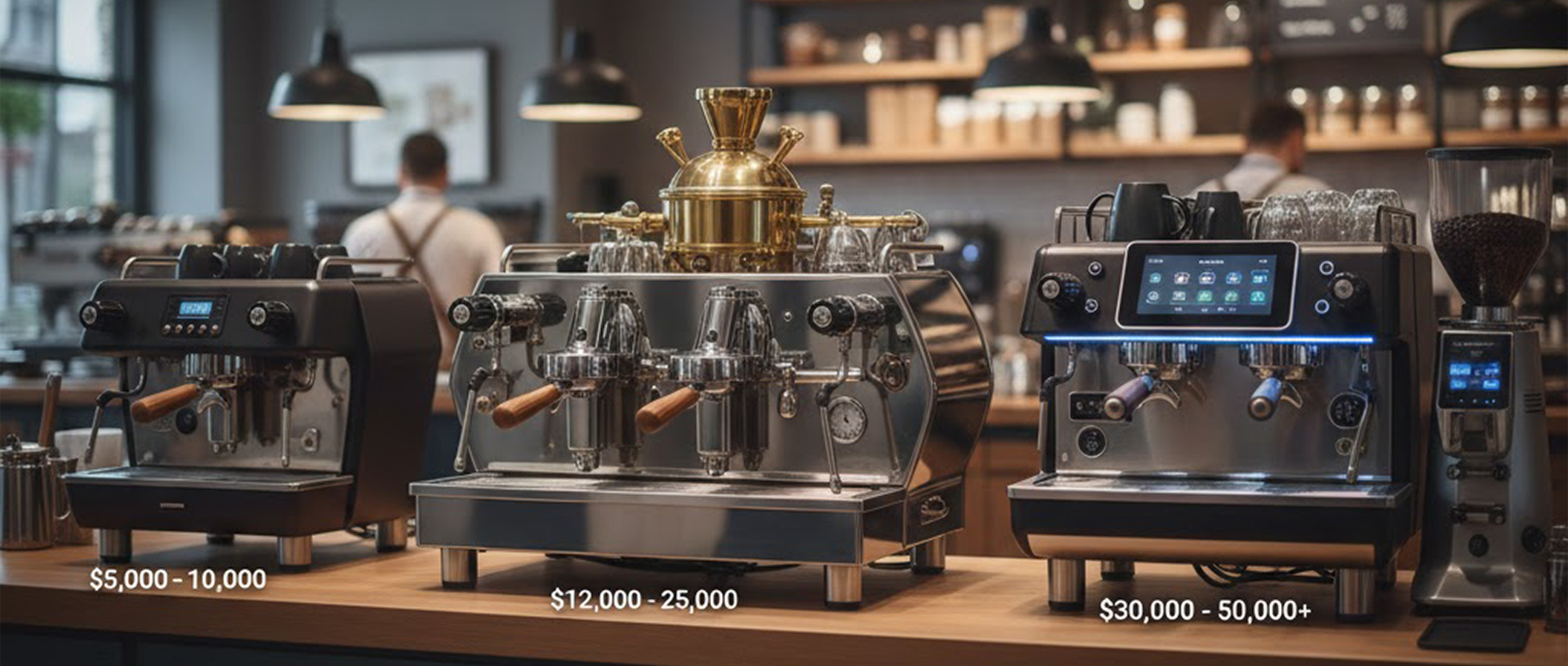
How Much Does a Commercial Espresso Machine Cost? Complete 2026 Price Guide
One of the first questions every café owner asks when planning their coffee shop is: “How much does a commercial espresso machine cost?” The answer isn’t simple, but understanding the investment required for quality equipment is essential to making informed decisions that will affect your business for years to come.
At Bean and Brew Technologies, we work with coffee shop owners every day who are navigating equipment purchases, and we’ve seen firsthand how proper budgeting for espresso machines can make or break a new café’s success. This comprehensive guide breaks down the real costs of commercial espresso machines across every category, helping you understand what you’ll actually pay and what you’ll get for your investment.
The Short Answer: What You’ll Really Spend
Commercial espresso machines range from approximately $5,000 to $35,000 for new equipment, with the majority of established coffee shops investing between $10,000 and $20,000 for their primary espresso machine. However, the machine itself represents only part of your total equipment investment.
Here’s what a complete espresso setup actually costs:
- Entry-Level Setup: $7,000 – $12,000 (machine, grinder, accessories)
- Mid-Range Professional Setup: $15,000 – $25,000 (machine, grinder, accessories)
- High-End Specialty Setup: $30,000 – $50,000+ (machine, grinder, accessories)
These ranges include the espresso machine, a quality commercial grinder, and essential accessories. Many new café owners make the mistake of budgeting only for the espresso machine and then discovering they need thousands more for grinders, knock boxes, pitchers, tampers, and other necessities.
Breaking Down Espresso Machine Costs by Category
Entry-Level Commercial Machines: $5,000 – $9,000
Entry-level commercial espresso machines are designed for lower-volume operations or businesses where espresso is a supplementary offering rather than the primary focus. These machines typically feature:
Common specifications:
- 1 or 2 group heads
- Heat exchanger boiler systems
- Semi-automatic operation
- Standard 110V or 220V electrical requirements
- Basic temperature control
Best for: Small cafés serving 50-150 drinks per day, restaurants adding espresso service, food trucks, coffee carts, or startup operations with limited budgets.
Popular brands in this range: Astoria Pratic Avant, La Spaziale, Rancilio (entry models)
Standout recommendation: The Astoria Pratic Avant represents exceptional value in the entry-level category. This Italian-made machine delivers reliable performance with a compact footprint, making it ideal for smaller operations that need professional results without the premium price tag. The Pratic Avant features a heat exchanger boiler system, volumetric controls for consistency, and the build quality Astoria is known for—all at a price point that makes it accessible for startups and budget-conscious operators.
While these machines can produce quality espresso, they have limitations. Heat exchanger systems mean you’re managing temperature more actively, recovery time between shots is slower, and you have less capacity during rush periods. For many businesses, these machines work perfectly well, but they require realistic expectations about volume capabilities.
The reality: If you’re opening a coffee shop expecting to serve more than 200 drinks daily, an entry-level machine will likely frustrate you within months. The time lost waiting for the machine to recover between drinks will cost you more in lost sales than the savings on the initial purchase.
Mid-Range Professional Machines: $10,000 – $18,000
This price range represents the sweet spot for most independent coffee shops. These machines offer the reliability, consistency, and capacity needed for serious coffee operations without the premium pricing of ultra-high-end equipment.
Common specifications:
- 2 or 3 group heads
- Dual boiler or multi-boiler systems
- Volumetric (automatic) or semi-automatic controls
- PID temperature control for consistency
- Stainless steel construction
- Commercial-grade components throughout
Best for: Established cafés serving 200-500 drinks per day, specialty coffee shops focused on quality, restaurants with significant coffee programs.
Popular brands in this range: La Marzocco (Linea Classic), Nuova Simonelli (Aurelia), Rancilio (Classe series), Synesso (select models)
Machines in this category offer genuine commercial reliability and consistency. The dual boiler systems provide stable temperatures for both brewing and steaming, allowing baristas to work efficiently during busy periods. PID controllers maintain precise temperature control, essential for extracting quality espresso consistently.
The investment in this range typically pays off through reduced downtime, lower maintenance costs, and the ability to maintain quality during high-volume periods. These machines are built to handle the demands of serious coffee operations for 7-10 years with proper maintenance.
High-End Professional Machines: $18,000 – $30,000+
High-end commercial espresso machines represent the pinnacle of espresso technology and craftsmanship. These machines are investments in both performance and brand positioning.
Common specifications:
- 2, 3, or 4 group heads
- Independent boilers for each group head
- Advanced pressure profiling capabilities
- Precision temperature control (±0.5°F)
- Premium materials and construction
- Smart connectivity and diagnostics
- Customizable aesthetics
Best for: High-volume specialty coffee shops, competition-focused cafés, establishments where coffee is the primary product and brand differentiator.
Popular brands in this range: La Marzocco (Linea PB, KB90), Synesso (Hydra, MVP), Slayer, Victoria Arduino (Black Eagle)
These machines offer capabilities that mid-range equipment can’t match. Pressure profiling allows baristas to manipulate extraction in real-time, bringing out different flavor characteristics from the same coffee. Independent group head boilers mean each station can operate at different temperatures, perfect for cafés serving multiple coffee origins simultaneously.
Beyond performance, high-end machines make a statement. When customers see a La Marzocco or Slayer behind your counter, they immediately understand your commitment to quality. For specialty coffee shops competing in premium markets, this brand positioning justifies the investment.
Understanding Group Head Configuration and Pricing
The number of group heads significantly impacts both price and throughput capacity. According to the Specialty Coffee Association, proper equipment sizing is crucial for operational efficiency.
1-Group Machines ($5,000 – $12,000): Capacity: 50-100 drinks per day Best for: Small operations, mobile setups, supplementary service
2-Group Machines ($8,000 – $20,000): Capacity: 150-300 drinks per day Best for: Small to medium cafés, most independent coffee shops
3-Group Machines ($12,000 – $30,000): Capacity: 300-500+ drinks per day Best for: High-volume cafés, multiple barista operations
4-Group Machines ($20,000 – $35,000+): Capacity: 500+ drinks per day Best for: Very high-volume operations, large hotel/convention center service
We’ve written a detailed guide on choosing between 1-group, 2-group, and 3-group machines that breaks down the decision-making process.
Hidden Costs Beyond the Machine Price
Smart café owners budget for the total cost of their espresso program, not just the machine itself. Here are the essential additional investments:
Commercial Grinders: $1,500 – $3,500
Your grinder is as important as your espresso machine. Many industry experts argue it’s even more important. A quality commercial grinder ensures consistent particle size distribution, essential for repeatable extraction.
Budget allocation: Plan to spend 15-25% of your espresso machine budget on grinders. For a $15,000 machine, that means $2,250-$3,750 for grinders.
Popular options: Mazzer, Mahlkönig, Eureka, Compak
Most operations need at least two grinders: one dedicated to espresso and one for decaf or alternative brewing methods.
Water Filtration: $500 – $2,000
Water quality directly impacts both espresso flavor and machine longevity. Minerals in water cause scale buildup that damages heating elements and reduces machine lifespan. According to the Water Quality Association, proper filtration is essential for commercial coffee equipment.
Required investment: Professional water filtration system with regular filter replacement schedule.
Annual filter costs: $200-$600 depending on water quality and volume.
Poor water quality is the leading cause of premature espresso machine failure. Spending $1,000 on proper filtration protects a $15,000 machine investment.
Installation and Plumbing: $500 – $2,500
Professional installation ensures your machine operates correctly from day one. This includes:
- Electrical work (220V circuits if needed)
- Plumbing connections to water supply and drain
- Proper leveling and positioning
- Initial setup and calibration
- Staff training
Many equipment suppliers, including Bean and Brew Technologies, include installation and training with equipment purchases, adding significant value beyond the machine itself.
Essential Accessories: $800 – $1,500
Don’t overlook these necessities:
- Knock boxes: $50-$150
- Milk pitchers (multiple sizes): $150-$300
- Tampers: $50-$200
- Shot glasses and measuring tools: $100-$200
- Cleaning supplies and backflushing detergent: $100-$200
- Cleaning brushes and tools: $50-$100
- Spare portafilters and baskets: $200-$400
Ongoing Maintenance: $1,000 – $3,000 Annually
Commercial espresso machines require regular professional maintenance to maintain performance and longevity:
- Quarterly preventive maintenance: $200-$400 per visit
- Annual deep cleaning and part replacement: $500-$1,000
- Emergency repairs: Budget $500-$1,000 for unexpected issues
Neglecting maintenance leads to equipment failure, inconsistent quality, and eventually costly repairs or premature replacement.
New vs. Used: Understanding the Trade-offs
Used commercial espresso machines can offer significant savings, but the decision isn’t straightforward. We’ve covered this topic extensively in our article on new versus used commercial espresso machines.
Used Machine Pricing:
- Entry-level used machines: $3,000 – $5,000
- Mid-range used machines: $6,000 – $12,000
- High-end used machines: $10,000 – $20,000
Advantages of used equipment:
- 30-50% cost savings compared to new
- Immediate availability
- Proven reliability (machines with service history)
- Allows higher-end equipment within limited budgets
Disadvantages of used equipment:
- No manufacturer warranty
- Unknown maintenance history
- Potential for hidden problems
- May lack modern features and efficiency
- Limited or no financing options
The verdict: Used equipment makes sense for experienced operators who can evaluate machine condition and have relationships with service technicians. For first-time café owners, the warranty and support that come with new equipment often justify the higher cost.
Financing Options: Making the Investment Manageable
The upfront cost of commercial espresso equipment can strain startup budgets. Fortunately, several financing options make quality equipment accessible:
Equipment Financing
Many equipment suppliers offer financing programs specifically designed for coffee shop equipment:
- Terms: 24-60 months
- Interest rates: 6-15% depending on credit
- Down payment: 10-20% typically required
- Monthly payments: $200-$600 for a typical setup
Example: A $15,000 espresso machine financed over 48 months at 8% interest costs approximately $366 per month.
SBA Loans
Small Business Administration loans offer favorable terms for equipment purchases:
- Lower interest rates than conventional financing
- Longer repayment terms (up to 10 years for equipment)
- Requires extensive documentation and time to process
Leasing
Equipment leasing offers an alternative to ownership:
- Lower monthly payments than purchase financing
- Equipment upgrades at lease end
- Potential tax advantages
- No equity building in the equipment
The right financing approach depends on your business structure, cash flow, and long-term plans.
How to Budget for Your Espresso Machine Purchase
When planning your equipment budget, follow these guidelines based on your projected business volume:
Low Volume (50-150 drinks/day):
- Total equipment budget: $10,000 – $15,000
- Espresso machine: $6,000 – $9,000
- Grinders: $1,500 – $2,500
- Water filtration and accessories: $1,500 – $2,500
Medium Volume (150-300 drinks/day):
- Total equipment budget: $18,000 – $28,000
- Espresso machine: $12,000 – $18,000
- Grinders: $2,500 – $4,000
- Water filtration and accessories: $2,000 – $3,500
High Volume (300+ drinks/day):
- Total equipment budget: $30,000 – $50,000+
- Espresso machine: $20,000 – $35,000
- Grinders: $4,000 – $6,000
- Water filtration and accessories: $3,000 – $5,000
Remember that equipment represents approximately 20-30% of total café startup costs, as detailed in our comprehensive guide on opening a coffee shop in 2026. Don’t allocate your entire budget to equipment at the expense of working capital, buildout, or marketing.
The True Cost of Cheap Equipment
We regularly encounter café owners who purchased the cheapest equipment available and regretted it within months. The true cost of underinvesting in equipment includes:
Lost Revenue During Downtime: A broken espresso machine during peak morning hours can cost $500-$1,000 in lost sales per day. If cheap equipment breaks down 5-10 times more frequently than quality equipment, the “savings” disappear quickly.
Inconsistent Quality: Equipment that can’t maintain stable temperatures or pressure produces inconsistent drinks. Inconsistency drives customers away, and acquiring new customers costs far more than retaining existing ones.
Higher Labor Costs: Slow or unreliable equipment requires more staff time per drink. If your machine is 30 seconds slower per drink and you serve 300 drinks daily, that’s 150 minutes of extra labor—over 2.5 hours of additional wages every day.
Premature Replacement: A $5,000 machine that lasts 3 years costs more than a $15,000 machine that lasts 10 years. The math is straightforward: $1,667/year vs. $1,500/year, plus the disruption and hassle of replacing equipment mid-operation.
Real-World Equipment Cost Examples
To make these numbers more concrete, here are actual equipment packages for different café types:
Budget-Conscious Startup Package ($10,800 total):
- Astoria Pratic Avant (2-group): $6,500
- Mazzer Mini grinder: $1,500
- Water filtration system: $700
- Accessories and installation: $2,100
Small Café Package ($12,500 total):
- Rancilio Classe 5 (2-group): $8,500
- Mazzer Super Jolly grinder: $1,800
- Water filtration system: $800
- Accessories and installation: $1,400
Mid-Size Café Package ($22,000 total):
- La Marzocco Linea Classic (3-group): $15,000
- Mahlkönig E65S grinder: $2,800
- Secondary grinder: $1,500
- Water filtration system: $1,200
- Accessories and installation: $1,500
High-End Specialty Shop Package ($38,000 total):
- La Marzocco Linea PB (3-group): $26,000
- Mahlkönig EK43 grinder: $2,800
- Mahlkönig E80 Supreme: $3,800
- Premium water filtration: $2,000
- Accessories and installation: $3,400
These packages reflect real-world pricing and demonstrate how costs scale with volume and quality expectations.
Making the Right Investment for Your Business
The “right” espresso machine cost depends on your specific situation:
Choose entry-level equipment if:
- You’re serving fewer than 100 drinks daily
- Espresso is supplementary to your main business
- You have severe budget constraints
- You’re testing a concept before full commitment
Choose mid-range equipment if:
- You’re operating a serious coffee program (150-400 drinks daily)
- Quality and consistency are important to your brand
- You can afford the investment or financing
- You’re building a sustainable long-term business
Choose high-end equipment if:
- You’re positioned as a specialty coffee destination
- Volume exceeds 300 drinks daily
- Your brand justifies premium positioning
- You’re competing in markets where equipment matters to customers
Questions to Ask Before Making Your Purchase
Before committing to an espresso machine purchase, answer these critical questions:
- What’s my realistic daily drink volume? Base this on actual projections, not hopes.
- What’s my total available budget? Include all equipment, not just the machine.
- Do I have adequate electrical infrastructure? Most quality machines require 220V.
- What’s my water quality? Test it before selecting equipment.
- Who will service my equipment? Ensure local service availability.
- What’s included in the price? Installation, training, warranty terms?
- What’s my break-even timeline? Can I afford this investment given my projections?
- Am I buying for today or tomorrow? Consider growth when sizing equipment.
Getting Expert Guidance on Equipment Investment
Choosing commercial espresso equipment represents one of the most significant investments in your café business. The decision deserves careful consideration, professional guidance, and realistic budgeting that accounts for total costs, not just the machine price tag.
At Bean and Brew Technologies, we’ve helped hundreds of coffee shops select equipment that matches their volume, budget, and quality expectations. We provide honest assessments of what different price points actually deliver, helping you make informed decisions rather than costly mistakes.
Whether you’re planning a new café, upgrading existing equipment, or expanding operations, understanding the true cost of commercial espresso machines is essential to making wise investments that serve your business for years to come.
The question isn’t just “How much does a commercial espresso machine cost?” The real question is: “What investment in coffee equipment will best serve my business goals, customer expectations, and financial capabilities?” Answering that question correctly separates thriving cafés from struggling ones.
Ready to discuss commercial espresso equipment for your coffee shop? Contact Bean and Brew Technologies at (973) 283-5568. We provide comprehensive equipment consultation, competitive pricing, professional installation, and ongoing service support throughout New York, New Jersey, Connecticut, and Pennsylvania.

Gary Downey
Gary Downey
Tags :
Coffee U Sunday: Weekly Coffee Business Education
Get expert coffee insights delivered to your inbox every Sunday. Equipment guides, brewing tips, business strategies, and industry trends to help your business succeed.
Categories
Categories
- Coffee Brewers (1)
- Coffee Business Success (9)
- Coffee Grinders (1)
- Coffee Shop Owners (8)
- Coffee Technology (3)
- Cold Brew Coffee (2)
- Espresso Machines (9)
- Espresso Shots (3)
- La Marzocco (2)
- Maintenance & Service (3)
- Specialty Coffee Drinks (3)
- Water Treatment (1)
📚 Equipment Guides
Comprehensive breakdowns of different machine types, helping you make informed purchasing decisions
 Maintenance Tips
Professional techniques to keep your equipment running at peak performance and extend its lifespan
 Brewing Science
Understand the ‘why’ behind extraction, temperature stability, and equipment design
 Troubleshooting Help
Common problems and solutions to minimize downtime and service calls
 Business Insights
ROI calculations, workflow optimization, and equipment selection for your specific needs
 Technology Explained
Demystifying features like PID control, pressure profiling, and heat exchange systems
Coffee U Sunday: Weekly Coffee Business Education
Get expert coffee insights delivered to your inbox every Sunday. Equipment guides, brewing tips, business strategies, and industry trends to help your business succeed.
Share
Use our search function or browse by category to find exactly what you need. Can’t find an answer? Contact us directly, your question might inspire our next Coffee U article! As we grow, so will this resource, shaped by the real needs of coffee professionals like you.
Start exploring Coffee U today and discover why Bean & Brew Technologies is committed to elevating the coffee industry through education and exceptional service.