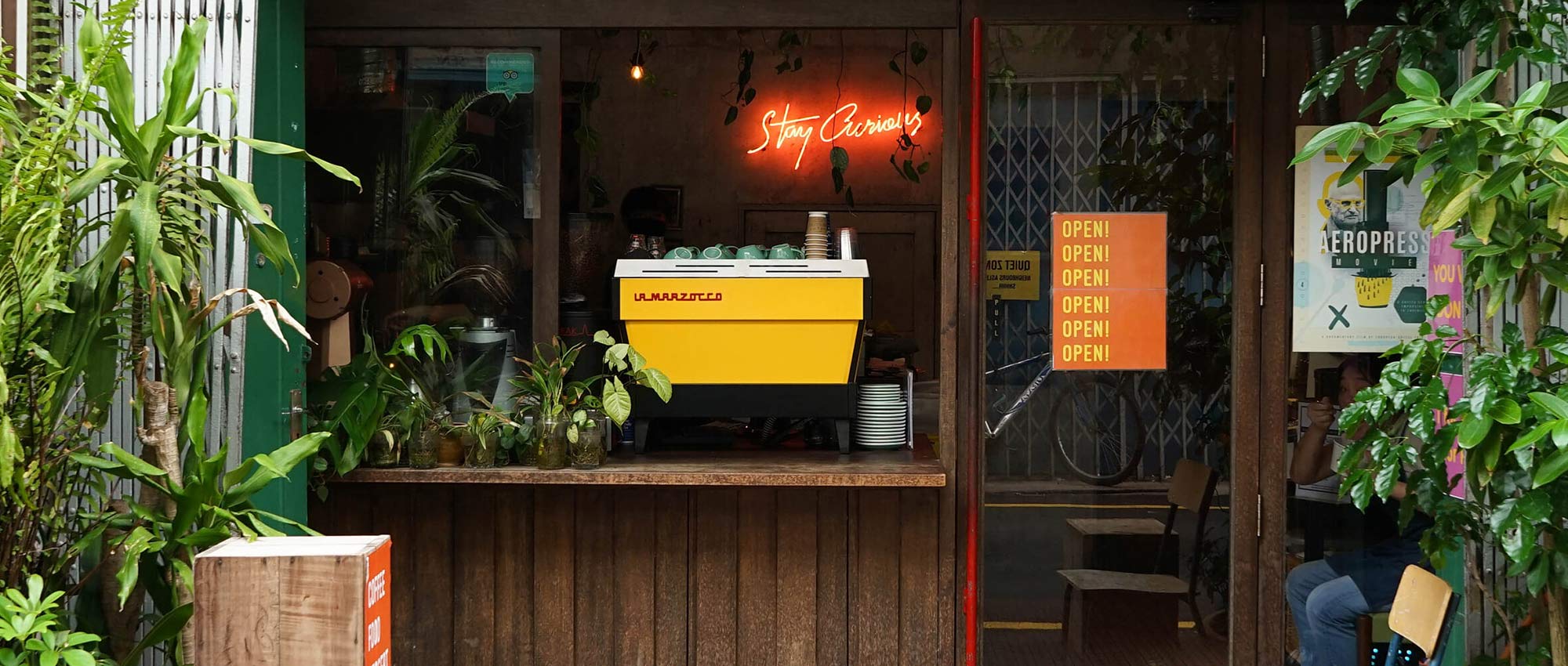
Choosing the right La Marzocco isn’t just about budget — it’s about matching the machine to your volume, your team, and your coffee program. With eight models ranging from the GS3 to the Strada XT, the differences matter. Here’s everything you need to know before you invest.
Dialing In Espresso: A Step-by-Step Guide to Promote Consistency
What Does “Dialing In” Actually Mean?
Why Dialing In Matters
The Variables You Control
Step-by-Step Dialing In Process
Step 1: Start with a Baseline Recipe
- Dose: 18 grams
- Yield: 36 grams (1:2 ratio)
- Target Time: 25 to 30 seconds
- Temperature: 200°F to 202°F
Step 2: Prepare Your First Shot
Step 3: Observe and Measure
Step 4: Taste and Evaluate
Step 5: Make One Adjustment at a Time
Step 6: Repeat Until Satisfied
Step 7: Document Your Recipe
- Grind setting (note the specific setting on your grinder)
- Dose weight
- Yield weight
- Extraction time
- Temperature
- Date and coffee details
When to Re-Dial
Common Dialing-In Mistakes
Advanced Considerations
Conclusion
How Often Should You Service Your Commercial Espresso Machine?
Your commercial espresso machine is the heartbeat of your cafe, restaurant, or coffee business. It generates revenue with every shot pulled, but only when it’s running at peak performance. Understanding the proper service schedule for your espresso machine isn’t just about preventing breakdowns, it’s about protecting your investment, maintaining consistent quality, and avoiding costly downtime that can devastate your bottom line.
In this comprehensive guide, I’ll break down exactly how often you should service your commercial espresso machine, what maintenance tasks should be performed at each interval, and why following a maintenance schedule is critical to your business success.
The True Cost of Neglecting Espresso Machine Maintenance
Before diving into service schedules, let’s address what’s at stake. A broken espresso machine during peak hours can cost you hundreds of dollars in lost revenue per hour. Emergency repairs typically run $500 to $2,000 or more, not counting the revenue lost while your machine is down. Worse, neglected machines have a lifespan of just 5 to 7 years, while properly maintained equipment can last 10 to 15+ years.
Scale buildup from poor water quality is the number one cause of commercial espresso machine failure. Regular maintenance catches these issues before they become catastrophic failures that shut down your business.
Daily Maintenance: The Foundation of Machine Longevity
Frequency: Every Single Day at Close of Business
Daily cleaning is non-negotiable. This isn’t technically “servicing” in the professional sense, but it’s the most critical maintenance your staff performs. Skipping daily cleaning even once allows coffee oils, grounds, and milk residue to build up, affecting taste quality and accelerating wear on critical components.
Daily Cleaning Checklist:
Backflushing (10 to 15 minutes):
- Insert blind filter basket with espresso machine detergent into portafilter
- Run backflush cycle: 10 seconds on, 10 seconds off, repeat 4 times per group head
- Remove detergent and flush with clean water until completely clear
- This removes coffee oils and residue from group heads and three way solenoid valves
Group Head Cleaning:
- Remove and scrub portafilters and baskets thoroughly
- Use group head brush to scrub dispersion screens
- Wipe gaskets clean and check for wear
Steam Wand Maintenance:
- CRITICAL: Purge and wipe steam wands immediately after EVERY use during service (not just at close of business)
- After steaming each pitcher of milk, purge the steam wand for 2 to 3 seconds to clear milk from inside the wand
- Immediately wipe down the exterior of the steam wand with a dedicated steam wand cloth
- At close of business, perform final purge and thorough wipe down
- Remove steam wand tips and soak in hot water with cleaning solution if needed
The Importance of Color Coded Cleaning Cloths:
This is critical for hygiene and food safety. Never use the same cloth for steam wands that you use for countertops. Here’s the proper system:
- Dedicated Steam Wand Cloth (Blue or designated color): Use ONLY for wiping steam wands after each use. This cloth contacts parts that touch milk and beverage components.
- Group Head/Portafilter Cloth (White or designated color): Use ONLY for wiping portafilters, group heads, and parts that contact brew water and coffee.
- Counter/Surface Cloth (Green or designated color): Use ONLY for wiping countertops, drip trays, and external surfaces.
Why this matters: Steam wands contact milk, which harbors bacteria. Using the same cloth on countertops (which may contact raw surfaces, money, hands, etc.) and then on steam wands creates serious cross contamination risks. Your steam wand touches the milk that goes into customer drinks. Using separate color coded cloths prevents health code violations and protects your customers.
Replace all cleaning cloths daily with freshly laundered ones.
Drip Trays and Exterior:
- Empty and clean drip trays
- Wipe down machine exterior, removing coffee grounds and milk splatter (use designated surface cloth)
- Clean countertops around machine (use designated surface cloth, never the steam wand cloth)
Why Daily Cleaning Matters:
Coffee oils turn rancid within 24 hours, creating bitter, off flavors that taint every shot. Milk residue harbors bacteria and can clog steam wands if not purged immediately after each use. Daily cleaning takes 20 to 30 minutes but prevents thousands in repairs and protects your coffee quality and food safety standards.
Steam wand neglect is particularly dangerous: Milk left inside or on steam wands after each use creates bacterial growth and buildup that can clog the wand, affect steam pressure, and create serious health hazards. Purging and wiping after every single use is non-negotiable.
Weekly Maintenance: Deeper Cleaning
Frequency: Once Per Week
Weekly maintenance goes beyond daily cleaning to address areas that accumulate residue over time.
Weekly Tasks:
Shower Screen Deep Clean:
- Remove shower screens from group heads
- Soak in espresso machine cleaner for 30 minutes
- Scrub thoroughly with brush
- Reinstall ensuring proper seal
Group Gasket Inspection:
- Inspect group gaskets for cracks, hardening, or coffee buildup
- Clean gasket groove thoroughly
- Note if replacement is needed
Steam Wand Deep Clean:
- Remove steam wand tips completely
- Soak in espresso machine cleaner or hot water with cleaning solution
- Use small brush to clean inside tip holes
- Check for milk buildup inside wand (if detachable)
- Reassemble and test steam flow
Grinder Maintenance:
- Remove and clean grinder hoppers
- Wipe out accessible areas of burr chamber
- Clean dosing chamber and chute
Cleaning Cloth Audit:
- Inspect all color coded cleaning cloths
- Replace any that are stained, torn, or degraded
- Ensure staff is using correct cloths for each task
Monthly Maintenance: Preventative Care
Frequency: Every 30 Days
Monthly maintenance addresses components that need regular attention to prevent problems.
Monthly Tasks:
Deep Backflushing:
- Perform thorough backflush cleaning with detergent
- Clean drains and drain lines
Basic Performance Check:
- Verify machine is heating properly
- Check that shots are pulling at correct time
- Ensure steam wands are producing good pressure
- Listen for any unusual sounds
Visual Inspection:
- Check for any leaks under or around machine
- Inspect portafilter baskets for wear
- Check steam wand condition and flow
- Verify all cleaning cloths are properly color coded and in good condition
Semi-Annual Professional Service (6 Months)
Frequency: Every 6 Months (Twice per year)
This is the minimum professional service frequency recommended for most commercial operations. A qualified technician should perform this service.
What 6 Month Service Includes:
Group Head Service:
- Replace group gaskets
- Replace or thoroughly clean shower screens
- Inspect and clean group head components
- Check for proper seal and pressure
Component Inspection:
- Check heating elements for proper function
- Test safety valves
- Inspect pump operation
- Verify temperature accuracy
Valve Maintenance:
- Clean or service three way solenoid valves
- Check all valve operation
Steam Wand Professional Service:
- Deep clean or replace steam wand tips
- Inspect internal steam wand components
- Check for proper steam flow and pressure
- Replace O rings and seals as needed
Seal and Gasket Replacement:
- Replace worn gaskets and O rings as needed
- Inspect steam wand seals
Water System:
- Replace water filters (typically every 3 to 6 months depending on usage)
- Check water lines for leaks
General Cleaning:
- Professional cleaning of internal components
- Remove accessible buildup
Cost of Semi-Annual Service:
Professional semi-annual service typically costs $225 to $450 per visit depending on machine complexity and what needs to be replaced.
Annual Comprehensive Service
Frequency: Once Per Year
Annual service is more thorough and addresses components that need less frequent attention.
Annual Service Includes Everything in 6 Month Service, Plus:
Complete Component Replacement:
- Replace all group gaskets and seals regardless of condition
- Replace shower screens
- Replace portafilter baskets if worn
- Replace steam wand tips
Thorough Inspection:
- Complete pump inspection
- Heating element testing
- All safety systems verified
- Boiler inspection (external)
Calibration:
- Temperature verification and adjustment if needed
- Pressure adjustment if needed
- Volumetric dosing verification (if applicable)
Professional Assessment:
- Technician provides report on machine condition
- Recommendations for any upcoming needs
- Water quality assessment
Service Frequency by Business Volume
Not all cafes have the same service needs. Here’s how to determine your ideal service schedule based on daily shot volume:
Low Volume (Under 100 shots/day):
- Professional Service: Every 6 to 12 months
- Small offices, boutique hotels, low volume restaurants
Medium Volume (100 to 300 shots/day):
- Professional Service: Every 6 months
- Neighborhood cafes, breakfast restaurants
High Volume (300 to 600 shots/day):
- Professional Service: Every 3 to 6 months
- Busy specialty coffee shops, high volume cafes
Very High Volume (600+ shots/day):
- Professional Service: Every 3 to 4 months or more frequently
- Major metro cafes, chains, very busy operations
Signs Your Machine Needs Immediate Service (Don’t Wait!)
Between scheduled services, watch for these warning signs:
Temperature Issues:
- Inconsistent brew temperature between shots
- Exceptionally hot or cool espresso
Pressure Problems:
- Loss of brew pressure
- Weak or slow extractions
Steam Issues:
- Weak steam pressure
- Sputtering or inconsistent steam flow
- Milk backing up into steam wand
Leaks:
- Water pooling under machine
- Drips from group heads between shots
- Steam leaks from wands or fittings
Unusual Sounds:
- Grinding or squealing from pump
- Hissing from unexpected areas
Performance Decline:
- Inconsistent shot quality
- Reduced steam power
Don’t wait for your scheduled service if you notice these issues. Small problems become expensive repairs when ignored.
The Role of Water Quality
Water quality dramatically impacts how often your machine needs service and how long it lasts.
Water filtration systems are non-negotiable for commercial espresso machines. Most manufacturer warranties require proper water filtration. A quality filtration system costs $500 to $1500 but saves thousands in repairs.
Poor water quality accelerates wear, causes scale buildup, and voids most warranties. Proper filtration is the single best investment you can make in equipment longevity.
Why Regular Professional Service Makes Sense
Scheduling regular professional maintenance visits offers significant advantages:
Cost Savings:
- Preventative maintenance is cheaper than emergency repairs
- Catch small issues before they become expensive problems
Equipment Protection:
- Regular replacement of wear items extends machine life
- Problems identified early prevent breakdowns
- Your investment lasts 10 to 15+ years instead of 5 to 7
Business Continuity:
- Scheduled service during slow hours minimizes disruption
- Prevents unexpected downtime during rush periods
- Maintains consistent coffee quality
Expert Care:
- Professional technicians diagnose issues you might miss
- Proper tools and parts for quality repairs
- Documentation of service history
Why Local Service Matters
When choosing a service provider, local matters:
Response Time:
- Same day or next day service for emergencies
- Technicians who can be on site quickly
Relationship:
- Technicians who know your machine’s history
- Direct communication, no call centers
Accountability:
- Face to face relationship
- Local reputation matters
Online equipment retailers can’t provide this level of service. When your machine breaks during Saturday morning rush, you need a local partner who answers the phone and shows up.
The Bottom Line: Maintenance Protects Revenue
Your commercial espresso machine is a revenue generating asset. Regular maintenance is far less expensive than emergency repairs and equipment replacement.
The math is simple:
- Semi-annual maintenance: $450 to $800/year
- Single emergency repair: $500 to $2,000+
- Revenue lost during downtime: $500 to $2,000 per day
- Early machine replacement due to neglect: $8,000 to $40,000
Professional service every 6 to 12 months, combined with proper daily cleaning (including purging and wiping steam wands after every use), ensures your machine delivers consistent espresso for 10 to 15+ years. Neglect maintenance, and you’re looking at expensive repairs, inconsistent quality, and premature equipment replacement.
Ready to Protect Your Investment?
At Bean and Brew Technologies, we provide comprehensive espresso machine service throughout New Jersey, New York, Pennsylvania, and Connecticut. We service all major brands and provide expert care from technicians who know commercial equipment inside and out.
Schedule regular maintenance visits to:
- Keep your equipment running at peak performance
- Prevent costly breakdowns
- Extend your machine’s lifespan
- Maintain consistent coffee quality
- Ensure proper hygiene and food safety standards
Don’t wait until your machine breaks down during your busiest hours. Proactive maintenance is always more affordable than emergency repairs, and your customers will taste the difference.
About Bean and Brew Technologies
Bean and Brew Technologies specializes in commercial espresso machine sales, installation, and service throughout New Jersey, New York, Pennsylvania, and Connecticut. We’re authorized dealers for La Marzocco, Mazzer, Curtis and other premium brands, providing the personalized service and local accountability that online retailers can’t match.
Contact us to schedule your next maintenance visit today.
How Much Does a Commercial Espresso Machine Cost? Complete 2026 Price Guide
One of the first questions every café owner asks when planning their coffee shop is: “How much does a commercial espresso machine cost?” The answer isn’t simple, but understanding the investment required for quality equipment is essential to making informed decisions that will affect your business for years to come.
At Bean and Brew Technologies, we work with coffee shop owners every day who are navigating equipment purchases, and we’ve seen firsthand how proper budgeting for espresso machines can make or break a new café’s success. This comprehensive guide breaks down the real costs of commercial espresso machines across every category, helping you understand what you’ll actually pay and what you’ll get for your investment.
The Short Answer: What You’ll Really Spend
Commercial espresso machines range from approximately $5,000 to $35,000 for new equipment, with the majority of established coffee shops investing between $10,000 and $20,000 for their primary espresso machine. However, the machine itself represents only part of your total equipment investment.
Here’s what a complete espresso setup actually costs:
- Entry-Level Setup: $7,000 – $12,000 (machine, grinder, accessories)
- Mid-Range Professional Setup: $15,000 – $25,000 (machine, grinder, accessories)
- High-End Specialty Setup: $30,000 – $50,000+ (machine, grinder, accessories)
These ranges include the espresso machine, a quality commercial grinder, and essential accessories. Many new café owners make the mistake of budgeting only for the espresso machine and then discovering they need thousands more for grinders, knock boxes, pitchers, tampers, and other necessities.
Breaking Down Espresso Machine Costs by Category
Entry-Level Commercial Machines: $5,000 – $9,000
Entry-level commercial espresso machines are designed for lower-volume operations or businesses where espresso is a supplementary offering rather than the primary focus. These machines typically feature:
Common specifications:
- 1 or 2 group heads
- Heat exchanger boiler systems
- Semi-automatic operation
- Standard 110V or 220V electrical requirements
- Basic temperature control
Best for: Small cafés serving 50-150 drinks per day, restaurants adding espresso service, food trucks, coffee carts, or startup operations with limited budgets.
Popular brands in this range: Astoria Pratic Avant, La Spaziale, Rancilio (entry models)
Standout recommendation: The Astoria Pratic Avant represents exceptional value in the entry-level category. This Italian-made machine delivers reliable performance with a compact footprint, making it ideal for smaller operations that need professional results without the premium price tag. The Pratic Avant features a heat exchanger boiler system, volumetric controls for consistency, and the build quality Astoria is known for—all at a price point that makes it accessible for startups and budget-conscious operators.
While these machines can produce quality espresso, they have limitations. Heat exchanger systems mean you’re managing temperature more actively, recovery time between shots is slower, and you have less capacity during rush periods. For many businesses, these machines work perfectly well, but they require realistic expectations about volume capabilities.
The reality: If you’re opening a coffee shop expecting to serve more than 200 drinks daily, an entry-level machine will likely frustrate you within months. The time lost waiting for the machine to recover between drinks will cost you more in lost sales than the savings on the initial purchase.
Mid-Range Professional Machines: $10,000 – $18,000
This price range represents the sweet spot for most independent coffee shops. These machines offer the reliability, consistency, and capacity needed for serious coffee operations without the premium pricing of ultra-high-end equipment.
Common specifications:
- 2 or 3 group heads
- Dual boiler or multi-boiler systems
- Volumetric (automatic) or semi-automatic controls
- PID temperature control for consistency
- Stainless steel construction
- Commercial-grade components throughout
Best for: Established cafés serving 200-500 drinks per day, specialty coffee shops focused on quality, restaurants with significant coffee programs.
Popular brands in this range: La Marzocco (Linea Classic), Nuova Simonelli (Aurelia), Rancilio (Classe series), Synesso (select models)
Machines in this category offer genuine commercial reliability and consistency. The dual boiler systems provide stable temperatures for both brewing and steaming, allowing baristas to work efficiently during busy periods. PID controllers maintain precise temperature control, essential for extracting quality espresso consistently.
The investment in this range typically pays off through reduced downtime, lower maintenance costs, and the ability to maintain quality during high-volume periods. These machines are built to handle the demands of serious coffee operations for 7-10 years with proper maintenance.
High-End Professional Machines: $18,000 – $30,000+
High-end commercial espresso machines represent the pinnacle of espresso technology and craftsmanship. These machines are investments in both performance and brand positioning.
Common specifications:
- 2, 3, or 4 group heads
- Independent boilers for each group head
- Advanced pressure profiling capabilities
- Precision temperature control (±0.5°F)
- Premium materials and construction
- Smart connectivity and diagnostics
- Customizable aesthetics
Best for: High-volume specialty coffee shops, competition-focused cafés, establishments where coffee is the primary product and brand differentiator.
Popular brands in this range: La Marzocco (Linea PB, KB90), Synesso (Hydra, MVP), Slayer, Victoria Arduino (Black Eagle)
These machines offer capabilities that mid-range equipment can’t match. Pressure profiling allows baristas to manipulate extraction in real-time, bringing out different flavor characteristics from the same coffee. Independent group head boilers mean each station can operate at different temperatures, perfect for cafés serving multiple coffee origins simultaneously.
Beyond performance, high-end machines make a statement. When customers see a La Marzocco or Slayer behind your counter, they immediately understand your commitment to quality. For specialty coffee shops competing in premium markets, this brand positioning justifies the investment.
Understanding Group Head Configuration and Pricing
The number of group heads significantly impacts both price and throughput capacity. According to the Specialty Coffee Association, proper equipment sizing is crucial for operational efficiency.
1-Group Machines ($5,000 – $12,000): Capacity: 50-100 drinks per day Best for: Small operations, mobile setups, supplementary service
2-Group Machines ($8,000 – $20,000): Capacity: 150-300 drinks per day Best for: Small to medium cafés, most independent coffee shops
3-Group Machines ($12,000 – $30,000): Capacity: 300-500+ drinks per day Best for: High-volume cafés, multiple barista operations
4-Group Machines ($20,000 – $35,000+): Capacity: 500+ drinks per day Best for: Very high-volume operations, large hotel/convention center service
We’ve written a detailed guide on choosing between 1-group, 2-group, and 3-group machines that breaks down the decision-making process.
Hidden Costs Beyond the Machine Price
Smart café owners budget for the total cost of their espresso program, not just the machine itself. Here are the essential additional investments:
Commercial Grinders: $1,500 – $3,500
Your grinder is as important as your espresso machine. Many industry experts argue it’s even more important. A quality commercial grinder ensures consistent particle size distribution, essential for repeatable extraction.
Budget allocation: Plan to spend 15-25% of your espresso machine budget on grinders. For a $15,000 machine, that means $2,250-$3,750 for grinders.
Popular options: Mazzer, Mahlkönig, Eureka, Compak
Most operations need at least two grinders: one dedicated to espresso and one for decaf or alternative brewing methods.
Water Filtration: $500 – $2,000
Water quality directly impacts both espresso flavor and machine longevity. Minerals in water cause scale buildup that damages heating elements and reduces machine lifespan. According to the Water Quality Association, proper filtration is essential for commercial coffee equipment.
Required investment: Professional water filtration system with regular filter replacement schedule.
Annual filter costs: $200-$600 depending on water quality and volume.
Poor water quality is the leading cause of premature espresso machine failure. Spending $1,000 on proper filtration protects a $15,000 machine investment.
Installation and Plumbing: $500 – $2,500
Professional installation ensures your machine operates correctly from day one. This includes:
- Electrical work (220V circuits if needed)
- Plumbing connections to water supply and drain
- Proper leveling and positioning
- Initial setup and calibration
- Staff training
Many equipment suppliers, including Bean and Brew Technologies, include installation and training with equipment purchases, adding significant value beyond the machine itself.
Essential Accessories: $800 – $1,500
Don’t overlook these necessities:
- Knock boxes: $50-$150
- Milk pitchers (multiple sizes): $150-$300
- Tampers: $50-$200
- Shot glasses and measuring tools: $100-$200
- Cleaning supplies and backflushing detergent: $100-$200
- Cleaning brushes and tools: $50-$100
- Spare portafilters and baskets: $200-$400
Ongoing Maintenance: $1,000 – $3,000 Annually
Commercial espresso machines require regular professional maintenance to maintain performance and longevity:
- Quarterly preventive maintenance: $200-$400 per visit
- Annual deep cleaning and part replacement: $500-$1,000
- Emergency repairs: Budget $500-$1,000 for unexpected issues
Neglecting maintenance leads to equipment failure, inconsistent quality, and eventually costly repairs or premature replacement.
New vs. Used: Understanding the Trade-offs
Used commercial espresso machines can offer significant savings, but the decision isn’t straightforward. We’ve covered this topic extensively in our article on new versus used commercial espresso machines.
Used Machine Pricing:
- Entry-level used machines: $3,000 – $5,000
- Mid-range used machines: $6,000 – $12,000
- High-end used machines: $10,000 – $20,000
Advantages of used equipment:
- 30-50% cost savings compared to new
- Immediate availability
- Proven reliability (machines with service history)
- Allows higher-end equipment within limited budgets
Disadvantages of used equipment:
- No manufacturer warranty
- Unknown maintenance history
- Potential for hidden problems
- May lack modern features and efficiency
- Limited or no financing options
The verdict: Used equipment makes sense for experienced operators who can evaluate machine condition and have relationships with service technicians. For first-time café owners, the warranty and support that come with new equipment often justify the higher cost.
Financing Options: Making the Investment Manageable
The upfront cost of commercial espresso equipment can strain startup budgets. Fortunately, several financing options make quality equipment accessible:
Equipment Financing
Many equipment suppliers offer financing programs specifically designed for coffee shop equipment:
- Terms: 24-60 months
- Interest rates: 6-15% depending on credit
- Down payment: 10-20% typically required
- Monthly payments: $200-$600 for a typical setup
Example: A $15,000 espresso machine financed over 48 months at 8% interest costs approximately $366 per month.
SBA Loans
Small Business Administration loans offer favorable terms for equipment purchases:
- Lower interest rates than conventional financing
- Longer repayment terms (up to 10 years for equipment)
- Requires extensive documentation and time to process
Leasing
Equipment leasing offers an alternative to ownership:
- Lower monthly payments than purchase financing
- Equipment upgrades at lease end
- Potential tax advantages
- No equity building in the equipment
The right financing approach depends on your business structure, cash flow, and long-term plans.
How to Budget for Your Espresso Machine Purchase
When planning your equipment budget, follow these guidelines based on your projected business volume:
Low Volume (50-150 drinks/day):
- Total equipment budget: $10,000 – $15,000
- Espresso machine: $6,000 – $9,000
- Grinders: $1,500 – $2,500
- Water filtration and accessories: $1,500 – $2,500
Medium Volume (150-300 drinks/day):
- Total equipment budget: $18,000 – $28,000
- Espresso machine: $12,000 – $18,000
- Grinders: $2,500 – $4,000
- Water filtration and accessories: $2,000 – $3,500
High Volume (300+ drinks/day):
- Total equipment budget: $30,000 – $50,000+
- Espresso machine: $20,000 – $35,000
- Grinders: $4,000 – $6,000
- Water filtration and accessories: $3,000 – $5,000
Remember that equipment represents approximately 20-30% of total café startup costs, as detailed in our comprehensive guide on opening a coffee shop in 2026. Don’t allocate your entire budget to equipment at the expense of working capital, buildout, or marketing.
The True Cost of Cheap Equipment
We regularly encounter café owners who purchased the cheapest equipment available and regretted it within months. The true cost of underinvesting in equipment includes:
Lost Revenue During Downtime: A broken espresso machine during peak morning hours can cost $500-$1,000 in lost sales per day. If cheap equipment breaks down 5-10 times more frequently than quality equipment, the “savings” disappear quickly.
Inconsistent Quality: Equipment that can’t maintain stable temperatures or pressure produces inconsistent drinks. Inconsistency drives customers away, and acquiring new customers costs far more than retaining existing ones.
Higher Labor Costs: Slow or unreliable equipment requires more staff time per drink. If your machine is 30 seconds slower per drink and you serve 300 drinks daily, that’s 150 minutes of extra labor—over 2.5 hours of additional wages every day.
Premature Replacement: A $5,000 machine that lasts 3 years costs more than a $15,000 machine that lasts 10 years. The math is straightforward: $1,667/year vs. $1,500/year, plus the disruption and hassle of replacing equipment mid-operation.
Real-World Equipment Cost Examples
To make these numbers more concrete, here are actual equipment packages for different café types:
Budget-Conscious Startup Package ($10,800 total):
- Astoria Pratic Avant (2-group): $6,500
- Mazzer Mini grinder: $1,500
- Water filtration system: $700
- Accessories and installation: $2,100
Small Café Package ($12,500 total):
- Rancilio Classe 5 (2-group): $8,500
- Mazzer Super Jolly grinder: $1,800
- Water filtration system: $800
- Accessories and installation: $1,400
Mid-Size Café Package ($22,000 total):
- La Marzocco Linea Classic (3-group): $15,000
- Mahlkönig E65S grinder: $2,800
- Secondary grinder: $1,500
- Water filtration system: $1,200
- Accessories and installation: $1,500
High-End Specialty Shop Package ($38,000 total):
- La Marzocco Linea PB (3-group): $26,000
- Mahlkönig EK43 grinder: $2,800
- Mahlkönig E80 Supreme: $3,800
- Premium water filtration: $2,000
- Accessories and installation: $3,400
These packages reflect real-world pricing and demonstrate how costs scale with volume and quality expectations.
Making the Right Investment for Your Business
The “right” espresso machine cost depends on your specific situation:
Choose entry-level equipment if:
- You’re serving fewer than 100 drinks daily
- Espresso is supplementary to your main business
- You have severe budget constraints
- You’re testing a concept before full commitment
Choose mid-range equipment if:
- You’re operating a serious coffee program (150-400 drinks daily)
- Quality and consistency are important to your brand
- You can afford the investment or financing
- You’re building a sustainable long-term business
Choose high-end equipment if:
- You’re positioned as a specialty coffee destination
- Volume exceeds 300 drinks daily
- Your brand justifies premium positioning
- You’re competing in markets where equipment matters to customers
Questions to Ask Before Making Your Purchase
Before committing to an espresso machine purchase, answer these critical questions:
- What’s my realistic daily drink volume? Base this on actual projections, not hopes.
- What’s my total available budget? Include all equipment, not just the machine.
- Do I have adequate electrical infrastructure? Most quality machines require 220V.
- What’s my water quality? Test it before selecting equipment.
- Who will service my equipment? Ensure local service availability.
- What’s included in the price? Installation, training, warranty terms?
- What’s my break-even timeline? Can I afford this investment given my projections?
- Am I buying for today or tomorrow? Consider growth when sizing equipment.
Getting Expert Guidance on Equipment Investment
Choosing commercial espresso equipment represents one of the most significant investments in your café business. The decision deserves careful consideration, professional guidance, and realistic budgeting that accounts for total costs, not just the machine price tag.
At Bean and Brew Technologies, we’ve helped hundreds of coffee shops select equipment that matches their volume, budget, and quality expectations. We provide honest assessments of what different price points actually deliver, helping you make informed decisions rather than costly mistakes.
Whether you’re planning a new café, upgrading existing equipment, or expanding operations, understanding the true cost of commercial espresso machines is essential to making wise investments that serve your business for years to come.
The question isn’t just “How much does a commercial espresso machine cost?” The real question is: “What investment in coffee equipment will best serve my business goals, customer expectations, and financial capabilities?” Answering that question correctly separates thriving cafés from struggling ones.
Ready to discuss commercial espresso equipment for your coffee shop? Contact Bean and Brew Technologies at (973) 283-5568. We provide comprehensive equipment consultation, competitive pricing, professional installation, and ongoing service support throughout New York, New Jersey, Connecticut, and Pennsylvania.

Common Espresso Machine Error Codes Decoded: What They Mean, Quick Fixes, and When to Call for Service
Every commercial espresso machine operator has experienced that sinking feeling when an error code flashes on the display during a busy morning rush. Understanding what these codes mean and knowing which issues you can resolve yourself versus when to call for professional service can save you time, money, and countless lost sales.
At Bean and Brew Technologies, we field service calls every day from café owners and operators dealing with error codes. While some issues require immediate professional attention, many common codes can be resolved with simple troubleshooting steps. This guide breaks down the most frequent error codes across major commercial espresso machine brands, what they indicate, and your best course of action.
Understanding Error Code Systems
Modern commercial espresso machines use error codes as a diagnostic language between the machine and the operator. These codes alert you to specific malfunctions, from minor sensor issues to critical system failures. Think of them as your machine’s way of communicating exactly what’s wrong, rather than leaving you to guess.
Different manufacturers use different coding systems. Some use numeric codes (Error 01, Error 02), others use alphanumeric combinations (E01, AL-05), and some display descriptive messages. Regardless of the format, the principle remains the same: the machine has detected something outside normal operating parameters and needs attention.
The Most Common Error Codes and What They Mean
Water-Related Errors
Low Water/No Water Detected (Codes: E01, AL-01, Code 10)
This is the most common error code you’ll encounter. The machine’s water level sensor isn’t detecting sufficient water in the tank or reservoir.
What causes it:
- Empty water reservoir or low water supply
- Faulty water level sensor
- Clogged water inlet filter
- Disconnected water line
- Failed float switch in the reservoir
- Poor water quality causing mineral buildup
Quick fixes you can try:
- Check your water source. Is the reservoir full? Is the water line valve open?
- Remove and clean the water tank, ensuring the sensor probe is free of mineral buildup
- Check the inlet filter screen for debris and clean if necessary
- Ensure all water line connections are secure
- Reset the machine by turning it off for 30 seconds, then restart
When to call for service: If the error persists after checking water supply and cleaning sensors, you likely have a failed sensor or control board issue that requires professional diagnosis.
Estimated downtime if you call for service: 1-2 hours for sensor replacement, same day service in most cases.
Temperature-Related Errors
Boiler Temperature Error (Codes: E02, E03, AL-02, Code 20, Code 98)
These codes indicate the machine cannot reach or maintain proper brewing temperature. This is a critical error because temperature stability is essential for quality espresso extraction.
What causes it:
- Failed heating element
- Malfunctioning temperature probe or thermocouple
- Tripped thermal safety cutoff
- Control board malfunction
- Low water level triggering boiler protection
- Scale buildup on heating elements
Quick fixes you can try:
- Check for any low water errors first, these often trigger temperature errors
- Allow the machine to cool completely, then restart
- Check your electrical supply, ensure you’re getting proper voltage
- Look for any visible leaks around the boiler area
When to call for service: Temperature errors almost always require professional service. Heating elements, probes, and control boards are not user-serviceable parts. Continuing to operate with temperature errors can cause serious damage to internal components.
Estimated downtime if you call for service: 2-4 hours depending on the specific component failure. Heating element replacement is more time-intensive than sensor replacement.
Pressure-Related Errors
Pump Pressure Error (Codes: E04, AL-04, Code 30)
The machine isn’t achieving the 9 bars of pressure needed for proper espresso extraction, or pressure is exceeding safe limits.
What causes it:
- Clogged group head screen or dispersion plate
- Worn or damaged pump
- Restricted water flow
- Failed pressure sensor (pressure transducer)
- Expansion valve malfunction
- Over-extracted or improperly ground coffee causing back pressure
Quick fixes you can try:
- Remove and clean all group head screens and dispersion plates
- Backflush with cleaning powder to clear any coffee oil buildup
- Check that your grind isn’t too fine, causing excessive resistance
- Run water through the group without portafilter to check flow
- Inspect water supply lines for kinks or restrictions
When to call for service: If cleaning doesn’t resolve the issue, the pump itself may be worn or the pressure transducer may have failed. Pump replacement requires specialized tools and expertise.
Estimated downtime if you call for service: 2-3 hours for pump replacement, 1-2 hours for pressure sensor replacement.
Electrical and Control Errors
General System Error (Codes: E05, E99, AL-99, Code 88)
These generic error codes indicate the control board has detected a system malfunction but can’t specify the exact issue.
What causes it:
- Power supply fluctuations or surges
- Control board glitch
- Multiple simultaneous sensor errors
- Software corruption
- Loose electrical connections
Quick fixes you can try:
- Perform a complete power cycle: unplug the machine, wait 2 minutes, plug back in
- Check your electrical panel for any tripped breakers
- Inspect visible wiring for any loose connections
- If your machine has a reset button, try using it
When to call for service: If a power cycle doesn’t clear the error, professional diagnostics are needed to identify the underlying issue.
Motor and Mechanical Errors
Grinder Motor Error (Codes: E06, Code 40) (for machines with integrated grinders)
The grinder motor has stopped responding or is drawing excessive current.
What causes it:
- Jammed grinder burrs
- Foreign object in burrs
- Worn motor bearings
- Overheated motor
- Failed motor capacitor
Quick fixes you can try:
- Check hopper for foreign objects
- Remove all beans and inspect burrs for obstructions
- Allow motor to cool if it’s been running continuously
- Clean burrs and surrounding area thoroughly
When to call for service: Motor issues typically require replacement of the motor assembly or related electrical components.
Brand-Specific Error Codes
La Marzocco Machines
La Marzocco machines use descriptive error messages on their digital displays:
- “FILL BOILER” – Low water level detected, check water supply
- “PROBE ERROR” – Temperature sensor malfunction, requires service
- “LEVEL ERROR” – Water level probe issue, may need cleaning or replacement
- “OVER TEMP” – Boiler temperature exceeded safe limits, requires immediate service
Rancilio Machines
Rancilio uses numeric codes:
- Code 01 – No water detected
- Code 02 – Boiler overheating
- Code 03 – Temperature probe error
- Code 04 – Pump malfunction
Nuova Simonelli
Nuova Simonelli displays “AL” codes:
- AL-01 – Water level error
- AL-02 – Coffee boiler temperature error
- AL-03 – Steam boiler temperature error
- AL-04 – Pressure error
Preventive Measures to Avoid Error Codes
The best way to deal with error codes is to prevent them from occurring in the first place. Here are essential maintenance practices:
Daily Tasks:
- Backflush with water after service
- Wipe down group heads and steam wands
- Empty and clean drip trays
- Check water supply and reservoir levels
Weekly Tasks:
- Backflush with cleaning powder
- Clean group head screens and gaskets
- Descale steam wands thoroughly
- Clean shower screens and dispersion plates
Monthly Tasks:
- Replace group head gaskets if worn
- Deep clean all removable components
- Check all visible hoses and connections
- Test water pressure and flow
Quarterly Tasks:
- Professional descaling service
- Replace water filters
- Comprehensive safety inspection
- Calibration check
When DIY Troubleshooting Becomes Risky
While many error codes can be resolved with basic troubleshooting, certain situations require immediate professional service:
Call for service immediately if:
- You see any water leaking from internal components
- The machine makes unusual grinding, buzzing, or clicking sounds
- You smell burning plastic or electrical odors
- Error codes return immediately after clearing them
- Multiple error codes appear simultaneously
- The machine won’t power on at all
- Steam or hot water is escaping from unexpected locations
Attempting repairs beyond basic troubleshooting can void warranties, cause additional damage, and create safety hazards. Commercial espresso machines operate under high pressure and temperature, making them potentially dangerous when malfunctioning.
The True Cost of Ignoring Error Codes
When an error code appears, the temptation to ignore it or simply reset the machine can be strong, especially during busy periods. However, this approach often leads to more expensive repairs down the line.
A simple sensor error today can become a failed heating element tomorrow if the underlying issue isn’t addressed. A minor pressure issue can evolve into complete pump failure. The $200 service call you avoid today might become a $2,000 equipment replacement next month.
Beyond repair costs, consider the revenue impact. A machine that’s producing inconsistent shots due to an ignored temperature error is costing you customer satisfaction and repeat business. Equipment that fails completely during peak hours means lost sales that can never be recovered.
Documentation is Your Friend
When error codes appear, document everything:
- The exact error code and display message
- What you were doing when the error occurred
- Any unusual sounds, smells, or behaviors
- Steps you took to troubleshoot
- Whether the error is constant or intermittent
This information is invaluable when you call for service. It helps technicians diagnose issues more quickly, potentially reducing your downtime and service costs.
Building a Relationship with Your Service Provider
The best time to establish a relationship with a qualified service technician is before you need emergency repairs. At Bean and Brew Technologies, we recommend that every commercial espresso machine operator have a service partner they trust.
A good service relationship means:
- Faster response times when emergencies occur
- Familiarity with your specific equipment and history
- Preventive maintenance scheduling that works for your business
- Priority service during equipment failures
- Expert guidance on when to repair versus replace
Understanding Your Machine’s Communication
Error codes aren’t your enemy. They’re your machine’s way of protecting itself and alerting you to issues before they become catastrophic failures. Learning to interpret these codes and respond appropriately is an essential skill for any commercial espresso machine operator.
While this guide covers the most common error codes, your specific machine may have unique codes not listed here. Always keep your operator’s manual accessible, and don’t hesitate to reach out to qualified service professionals when you’re unsure. For more coffee equipment insights, explore our complete Coffee University library.
The goal isn’t to turn every café owner into an espresso machine technician. The goal is to empower you with enough knowledge to make informed decisions about when you can troubleshoot and when you need professional help. This balance keeps your equipment running reliably, your costs manageable, and your customers happy with consistently excellent espresso.
Remember, every minute your machine is down is revenue you’re not generating. Quick, informed responses to error codes minimize downtime and maximize your return on equipment investment. Whether you’re dealing with a simple water sensor issue or a complex control board malfunction, understanding what your machine is telling you is the first step toward resolution.
At Bean and Brew Technologies, we’re here to help you navigate these challenges. Our team combines technical expertise with real-world understanding of commercial coffee operations. When error codes appear, you’re not alone in solving them. Learn more about our comprehensive service programs.
Have questions about a specific error code on your espresso machine? Contact Bean and Brew Technologies at (973) 283-5568. Our certified technicians are ready to help diagnose issues and get your equipment back to peak performance.
Coffee Shop Challenges 2026
As we move into 2026, the coffee shop industry continues to thrive despite facing new challenges that require smart, strategic responses. Behind every perfectly pulled espresso shot and beautifully poured latte lies an opportunity to build systems, develop expertise, and create a sustainable business that serves your community for years to come. The passion that draws entrepreneurs into cafe ownership remains as relevant as ever, but today’s successful operators complement that passion with business acumen, adaptability, and proven strategies for navigating a dynamic market.
Coffee shop owners entering 2026 have access to more resources, technology, and industry knowledge than ever before. While challenges like inflation, staffing, and competition require attention, thousands of cafes across the country are not just surviving but flourishing by implementing smart solutions and focusing on what matters most: delivering exceptional experiences that keep customers coming back. Understanding these challenges and knowing how to address them effectively is what separates thriving cafes from those that struggle.
Managing Inflation: Strategic Pricing in 2026
Inflation continues as a significant factor affecting coffee shop operations, but smart operators are finding effective ways to manage costs while maintaining profitability. According to Toast’s 2025 Voice of the Restaurant Industry Survey, 24% of full-service restaurant operators ranked inflation as their top pain point, representing a nine-point increase from 2024. However, this widespread challenge has also driven innovation in how successful cafes manage their finances and communicate value to customers.
The cost of coffee beans remains volatile, presenting both challenges and opportunities. While prices fluctuate, direct relationships with importers and roasters can provide more predictable pricing. Specialty coffee shops that differentiate themselves through high-quality, ethically sourced beans can often command premium prices that customers willingly pay because they understand and appreciate the value. Milk prices fluctuate, but many cafes are successfully diversifying their offerings with alternative milk options that appeal to health-conscious customers while sometimes offering better margins.
Beyond ingredients, successful coffee shop owners are getting strategic about managing fixed costs. Negotiating favorable lease terms, investing in energy-efficient equipment that reduces utility costs, and implementing preventive maintenance programs that avoid expensive emergency repairs all contribute to healthier bottom lines.
Here’s the encouraging news: Toast research shows that 57% of diners understand why restaurants need to raise prices. Today’s consumers are more educated about supply chains, ingredient costs, and the realities of running a small business than ever before. The same Toast survey reveals that 51% of operators successfully adjusted menu prices in response to rising costs, and many found that transparent communication about why prices increased actually strengthened customer loyalty rather than damaging it.
Smart coffee shops are approaching pricing strategically by highlighting the quality and sourcing of their ingredients, offering tiered pricing with premium options alongside everyday favorites, implementing loyalty programs that reward regular customers, communicating value through storytelling about farmers, roasters, and preparation methods, and introducing profitable add-ons and upsells that enhance the customer experience while improving margins.
The cafes thriving despite inflation aren’t necessarily those with the lowest costs but rather those that clearly communicate value and build strong enough customer relationships that people choose quality over convenience or price alone.
Building a Strong Team: Solving the Staffing Challenge
Staffing remains an important consideration for coffee shop owners in 2026, but forward-thinking cafes are finding innovative solutions that turn this challenge into a competitive advantage. While finding skilled baristas requires effort, the coffee shops that invest in their teams are seeing remarkable returns in customer satisfaction, operational consistency, and overall profitability.
The key insight successful operators have discovered is that reducing turnover is far more valuable than constantly recruiting. Training a barista to excellence requires time and investment, but keeping that talented employee becomes much easier when you create an environment where they want to stay and grow. The cafes winning the talent battle are those that treat their teams as valuable assets rather than replaceable labor.
Progressive coffee shops are implementing strategies that dramatically improve retention. Offering competitive wages that reflect the skill and value baristas provide makes your business an employer of choice. Creating clear career paths where baristas can advance to shift leads, trainers, or management positions gives ambitious employees reasons to stay. Providing flexible scheduling that respects work-life balance attracts quality candidates who have options. Investing in ongoing training and education, including coffee certifications and professional development, shows employees you’re invested in their growth. Building a positive culture where staff feel valued, respected, and part of something meaningful creates loyalty that transcends wage competition.
The financial benefits of these investments are substantial. Lower turnover means reduced recruitment and training costs. Experienced staff work faster and more efficiently during rush periods. Consistent teams deliver better product quality that builds customer loyalty. Happy employees provide better service, creating a virtuous cycle of positive reviews and repeat business.
Regarding the tipping decline noted in Toast data showing tips fell to 19.1% in Q2 2025, innovative cafes are responding creatively. Some are implementing service charges that ensure predictable income for staff. Others are building comprehensive compensation packages that don’t rely solely on tips. Many are using technology to make tipping easier and more prominent for customers who do want to show appreciation.
The most successful coffee shops view their team as their greatest competitive advantage. While chains can replicate your menu and copy your aesthetic, they can’t duplicate the relationships your skilled, long-term staff build with regular customers. Investing in your people isn’t just about solving a staffing problem; it’s about building the foundation for long-term success.
Smart Equipment Investment and Maintenance
Quality equipment forms the backbone of any successful coffee operation, and smart operators view equipment investment as an opportunity rather than a burden. While commercial espresso machines and grinders represent significant capital investments ranging from $5,000 to $20,000 or more, choosing the right equipment and maintaining it properly delivers returns that far exceed the initial cost.
The good news is that today’s commercial coffee equipment is more reliable and efficient than ever. Modern espresso machines feature advanced temperature stability, user-friendly controls, and built-in diagnostics that alert you to potential issues before they become expensive problems. Quality grinders from established manufacturers can operate for decades with proper care, delivering consistent results that directly impact your product quality and customer satisfaction.
Successful coffee shop owners approach equipment strategically. They choose reliable brands with strong service networks and readily available parts. They establish relationships with qualified technicians before problems arise, not during emergencies. They implement preventive maintenance schedules that include regular cleaning, descaling, gasket replacement, and system checks, which cost a fraction of emergency repairs and prevent revenue-destroying downtime during peak hours.
Water filtration deserves special mention as one of the smartest investments a cafe can make. Quality filtration systems protect expensive equipment from scale damage, extend machine lifespan by years, improve coffee taste significantly, and reduce long-term maintenance costs. The relatively small ongoing cost of filter replacements prevents thousands of dollars in potential equipment damage.
Many equipment suppliers, including Bean and Brew Technologies, now offer comprehensive service plans that provide regular preventive maintenance, priority emergency service, training for your staff on proper equipment use and basic troubleshooting, and peace of mind knowing that experts are monitoring your equipment health. These plans transform equipment from a source of anxiety into a reliable business asset.
Smart operators also build backup plans. Having a backup grinder prevents total service disruption if your primary grinder needs repair. Maintaining relationships with local equipment dealers who can provide loaner equipment during major repairs keeps you operational during unexpected issues. Creating emergency procedures that your team understands prevents panic and revenue loss when equipment issues do occur.
The coffee shops that view equipment as a strategic investment rather than a necessary evil are the ones that maintain consistent quality, avoid costly downtime, and build reputations for reliability that keep customers coming back.
Achieving Excellence Through Consistency
Consistency represents one of the greatest opportunities for coffee shops to differentiate themselves and build loyal customer bases. When customers know they can count on the same excellent experience every visit, they become regulars, advocates, and the foundation of sustainable success. The cafes that master consistency aren’t struggling with it; they’re leveraging it as their competitive advantage.
Today’s technology and training methods make achieving consistency more attainable than ever. Volumetric espresso machines automatically control shot volume, eliminating variation between baristas and shifts. Digital scales provide precise dose measurements that ensure every drink starts with the correct amount of coffee. Temperature-controlled equipment maintains optimal brewing conditions automatically. These tools don’t replace skill; they support your baristas in delivering excellence consistently.
The most successful coffee shops implement clear systems that make consistency achievable. They document standard operating procedures for every drink on the menu, creating clear, step-by-step guides that remove guesswork. They establish quality control checkpoints where drinks are evaluated before reaching customers, catching inconsistencies before they impact satisfaction. They create training programs that teach not just techniques but the reasoning behind them, helping baristas understand why each step matters. They use checklists for opening, closing, and maintenance tasks, ensuring nothing is forgotten regardless of who’s working.
Modern tools support consistency in ways that weren’t possible years ago. Digital recipe cards displayed at workstations provide constant reference points. Scales that connect to your point-of-sale system can track dose consistency across shifts. Training videos allow new staff to review techniques repeatedly until they master them. Some innovative cafes even use cameras to record and review preparation techniques, providing coaching opportunities that accelerate skill development.
The business benefits of consistency are substantial. Customers return because they trust you’ll deliver the experience they’re expecting. Positive reviews accumulate as satisfied customers share reliable experiences. Staff confidence grows when they have clear standards and reliable methods. Quality control becomes easier when you have documented standards to reference. Training new employees becomes faster when you have proven systems to teach.
Rather than seeing consistency as a burden, forward-thinking operators recognize it as the foundation of everything else they want to achieve. You can’t build a loyal customer base on inconsistency. You can’t effectively market a product that varies wildly. You can’t scale your business if quality depends entirely on which employee happens to be working. Consistency is what transforms a good idea into a sustainable business.
Meeting and Exceeding Customer Expectations
Today’s coffee shop customers bring sophisticated tastes and high expectations, which represents an exciting opportunity for cafes that deliver exceptional experiences. Modern customers don’t just want good coffee; they’re seeking an experience that justifies leaving home, and they’re willing to pay premium prices for businesses that deliver it consistently.
The evolution of customer expectations has actually raised the entire industry. Customers now appreciate origin stories, understand processing methods, recognize quality equipment, and value skilled preparation. This education creates opportunities for cafes that invest in quality to differentiate themselves and command pricing that supports sustainable operations. When customers understand why your beans cost more or why your baristas spend years perfecting their craft, they become advocates rather than price shoppers.
Social media, often viewed as adding pressure, actually provides free marketing for cafes that embrace it strategically. Every beautifully photographed latte, every customer post tagging your location, every share of your origin story extends your reach far beyond what traditional advertising could achieve. The cafes succeeding on social media aren’t spending hours daily on content creation; they’re creating genuine experiences worth sharing and making it easy for customers to do so.
The morning rush, while intense, represents your most valuable revenue opportunity. Customers during rush periods are often your most loyal regulars, the ones who trust you enough to depend on you for their daily ritual. Smart cafes optimize for rush periods by designing efficient workflows that maintain quality while improving speed, training staff specifically for high-volume service, implementing mobile ordering that reduces wait times, offering grab-and-go options alongside made-to-order drinks, and creating loyalty programs that reward and retain your best customers.
Third-party delivery platforms require strategic thinking rather than blanket adoption. The most successful approach treats delivery as one channel among many rather than trying to be everything to everyone. Some cafes negotiate better commission rates by committing to exclusive partnerships. Others focus on house delivery with employed drivers, keeping control and margins. Many create delivery-specific menu items with better margins and transport characteristics. The key is making delivery work for your business model rather than accepting terms that destroy profitability.
Managing online reputation has become easier with tools that centralize review monitoring and response. Successful operators view reviews as free market research and relationship-building opportunities. They respond promptly and professionally to negative feedback, often converting disappointed customers into loyal advocates. They encourage satisfied customers to share experiences, building social proof that attracts new business. They use Google Business Profile and Yelp strategically as marketing platforms rather than viewing them as necessary evils.
The coffee shops thriving in 2026 don’t see customer expectations as burdens; they see them as standards to exceed and opportunities to wow people who appreciate excellence. Every high expectation represents a chance to demonstrate your value and justify your premium positioning.
Technology as Your Competitive Advantage
The technology available to coffee shop owners in 2026 provides unprecedented opportunities to operate more efficiently, understand your business better, and deliver superior customer experiences. Smart operators embrace these tools as force multipliers that amplify their efforts and expertise.
Modern point-of-sale systems have evolved far beyond simple transaction processing. Today’s systems provide real-time insights into sales trends, labor efficiency, inventory turnover, and customer preferences. They identify your most profitable items, your busiest hours, and your most valuable customers. This data empowers better decision-making in every aspect of your business, from scheduling to menu development to marketing.
Volumetric espresso machines represent another technology investment with immediate returns. These machines deliver consistent shot volumes automatically, dramatically reducing training time for new baristas while ensuring quality remains high even during busy periods. The consistency they provide directly translates to customer satisfaction and operational efficiency.
Scheduling and labor management software optimizes one of your largest expenses by ensuring you have the right staffing levels at the right times, reducing costly overstaffing during slow periods while preventing understaffing during rushes. Many systems now integrate with your POS to automatically suggest optimal schedules based on historical traffic patterns.
For coffee shop owners looking to grow their customer base, investing in local SEO strategies has become essential. With the majority of customers discovering coffee shops through Google searches and map applications, ensuring prominent placement in local search results directly impacts foot traffic and revenue. The good news is that local SEO is one of the most cost-effective marketing strategies available, delivering long-term results without ongoing advertising expenses.
Your Path to Coffee Shop Success in 2026
Here’s what every prospective and current coffee shop owner needs to understand: the challenges facing the industry in 2026 are real, but they’re also manageable and increasingly well-understood. More importantly, thousands of independent coffee shops across America are not just surviving but thriving by implementing the strategies and systems outlined in this article.
The cafes that succeed share common characteristics that have nothing to do with luck and everything to do with intentional business practices. They understand their numbers and make data-driven decisions about pricing, labor, and inventory. They invest in their people through competitive compensation, thorough training, and genuine career development. They choose quality equipment and maintain it proactively rather than reactively. They build systems that ensure consistency across all shifts and service periods. They embrace technology that improves efficiency and customer experience. They view challenges as opportunities to differentiate themselves from competitors.
Most importantly, successful coffee shop owners approach their businesses with both passion and professionalism. They love coffee and creating community spaces, but they also respect the business fundamentals that ensure sustainability. They stay informed about industry trends and best practices. They build relationships with suppliers, equipment dealers, and fellow cafe owners who can provide guidance and support. They’re willing to adapt when something isn’t working rather than stubbornly pursuing failing strategies.
The coffee shop industry is stronger and more sophisticated than ever. The resources available to new and existing operators, from equipment technology to training programs to business education, have never been better. Consumer appreciation for quality coffee and exceptional cafe experiences continues growing, supporting businesses that deliver genuine value.
If you’re considering opening a coffee shop, don’t be discouraged by the challenges outlined in this article. Instead, use them as your blueprint for preparation and success. Every challenge has proven solutions. Every obstacle has been overcome by operators who came before you. With adequate planning, sufficient capitalization, commitment to excellence, and willingness to implement best practices, your coffee shop can absolutely succeed in 2026 and beyond.
For established operators facing these challenges, remember that your experience and customer relationships give you advantages that new competitors can’t easily replicate. Double down on what makes your cafe special. Invest in the systems and improvements that will strengthen your competitive position. Connect with other local business owners who understand the challenges and can provide mutual support.
The coffee shop business in 2026 offers tremendous opportunities for operators who bring both passion and professionalism to their work. The market is strong, customers are willing to pay for quality, technology provides unprecedented support, and proven strategies for success are well documented and readily available. Your success isn’t a matter of luck or perfect timing, it’s a matter of preparation, execution, and commitment to continuous improvement. The cafes that will thrive in 2026 and beyond aren’t those that avoid challenges; they’re the ones that face challenges head-on with smart strategies, resilient systems, and unwavering dedication to delivering exceptional experiences that keep customers coming back day after day, year after year.
Do You Need a Volumetric or Manual Espresso Machine?
Choosing between a volumetric and manual espresso machine is one of the most important decisions you’ll make when equipping your cafe, restaurant, or coffee shop. While both types can produce excellent espresso, they operate very differently and serve distinct business needs. Understanding the key differences will help you invest in equipment that matches your operation’s volume, skill level, and service style.
What is a Manual Espresso Machine?
A manual espresso machine requires the barista to control the entire extraction process by hand. The operator starts the pump to begin pulling the shot and stops it when they determine the extraction is complete. This hands-on approach gives experienced baristas complete control over every espresso shot.
With a manual machine, timing and volume are determined by the barista’s skill, judgment, and attention. They must watch the shot as it pulls, observing the color, flow rate, and volume to decide the optimal moment to stop extraction. This typically takes 25-30 seconds for a standard double shot, but can vary based on the coffee, grind size, and desired flavor profile.
Manual machines are often preferred by specialty coffee shops and cafes where espresso quality is paramount and baristas take pride in their craft. They allow for experimentation and adjustment shot-by-shot, which appeals to coffee professionals who want maximum control. Premium brands like La Marzocco offer manual versions of their commercial machines for operations that prioritize barista skill and craft.
What is a Volumetric Espresso Machine?
A volumetric espresso machine uses built-in flow meters to automatically measure and dispense precise amounts of water for each shot. The barista programs specific volumes for single shots, double shots, and other drinks, and the machine stops extraction automatically when that volume is reached.
Once programmed, pulling a shot on a volumetric machine is as simple as pressing a button. The machine handles timing and water volume, freeing the barista to focus on other tasks like steaming milk, taking orders, or preparing the next drink. Consistency is the hallmark of volumetric systems, every shot receives exactly the same volume of water, regardless of who’s working the bar.
Volumetric machines have become the industry standard for most commercial coffee operations, from busy cafes to hotel restaurants. They balance quality, consistency, and speed in a way that supports high-volume service. The La Marzocco Linea Classic is available in both manual (EE) and volumetric (AV) configurations, making it one of the most versatile commercial espresso machines on the market.
Key Differences Between Manual and Volumetric Machines
Control and Flexibility
Manual machines give baristas complete control over extraction. An experienced operator can adjust on the fly for variables like coffee freshness, humidity, or grind inconsistencies. If a shot is running too fast or too slow, they can compensate by extending or shortening the extraction time.
Volumetric machines prioritize consistency over flexibility. Once programmed, they deliver the same result every time. While you can reprogram volumes as needed, you lose the ability to make real-time adjustments for individual shots.
Speed and Efficiency
In high-volume environments, volumetric machines significantly increase speed and efficiency. Baristas can start a shot and immediately move on to the next task without watching the extraction. This multitasking capability becomes crucial during rush periods when every second counts.
Manual machines require constant attention during extraction. The barista must remain at the machine to stop each shot at the right moment, which limits their ability to work on multiple drinks simultaneously. For a busy cafe serving 200+ drinks per day, this can create bottlenecks.
Consistency
Volumetric machines excel at consistency. Every shot receives precisely the same water volume, which helps maintain drink quality across shifts and different baristas. This consistency is valuable for building customer loyalty, regulars expect their latte to taste the same every visit.
Manual machines introduce more variability. Even skilled baristas will have slight differences in timing and judgment, especially during busy periods when focus is divided. New or less experienced staff may struggle to maintain consistency without extensive training.
Training Requirements
Training staff on volumetric machines is relatively straightforward. New baristas can learn to pull consistent shots in a matter of hours or days. The machine handles the technical precision, allowing training to focus on other skills like milk steaming and drink assembly.
Manual machines demand more extensive training and practice. Baristas need to develop the sensory skills and judgment to evaluate extraction quality in real time. However, many cafes use digital scales as a training tool and consistency aid, by weighing the espresso as it extracts, baristas can stop the shot when it reaches the target weight (typically 36-40 grams for a double shot starting with 18-20 grams of coffee). This method teaches proper extraction ratios while building the visual and sensory skills needed to eventually pull shots without the scale. Even with scales as a guide, the learning curve can take weeks or months, and maintaining quality requires ongoing attention and refinement.
Cost Considerations
Volumetric machines typically cost more upfront than comparable manual machines due to their flow meter technology and programmable controls. Expect to pay anywhere from $1,000 to $5,000 more for volumetric functionality, depending on the machine size and brand.
However, volumetric machines can reduce labor costs over time. Faster service means you can serve more customers with the same number of staff, and easier training reduces onboarding time and improves staff flexibility.
Manual machines have lower initial costs and simpler mechanics, which can mean fewer potential points of failure. However, flow meters in volumetric machines are generally reliable, and repair costs are comparable for both types when properly maintained.
La Marzocco Linea Classic: EE vs. AV
One of the best examples of the manual versus volumetric decision comes from La Marzocco’s iconic Linea Classic, which is available in two configurations:
Linea Classic EE (Elettronica) – This is the manual (semi-automatic) version. Baristas start and stop each shot manually using paddle controls. The EE offers complete control over extraction and is favored by specialty cafes, competition baristas, and coffee shops where craft is central to the brand identity. This model allows for real-time adjustments and showcases barista skill.
Linea Classic AV (Automatica Volumetrica) – This is the volumetric version with programmable shot buttons. The AV automatically stops extraction based on pre-programmed water volumes, ensuring consistency across all shots. This configuration is ideal for high-volume operations, multi-location businesses, and any cafe prioritizing efficiency and repeatability.
Both versions share La Marzocco’s legendary build quality, dual boiler technology, and PID temperature control. The choice between EE and AV comes down purely to operational preference, manual control versus automated consistency and budget. Many operators running multiple locations will choose AV machines for easier staff training and standardized output, while single-location specialty shops often prefer the EE for its craft-focused approach.
The beauty of the Linea Classic platform is that whether you choose manual or volumetric, you’re getting the same exceptional espresso quality and reliability that has made La Marzocco the gold standard in commercial espresso equipment.
Which Type is Right for Your Business?
Choose a Volumetric Machine If:
You operate a high-volume cafe or restaurant. When you’re serving 150+ espresso-based drinks per day, the speed and efficiency of volumetric operation becomes essential. The ability for baristas to multitask during extraction can dramatically improve throughput during rush periods. Machines like the La Marzocco Linea Classic AV are specifically designed for these demanding environments.
You have frequent staff turnover. Restaurants, hotels, and chains benefit from the easier training that volumetric machines provide. New employees can be productive quickly without requiring advanced barista skills.
Consistency is your priority. If your business model depends on delivering the same experience every time, like a chain or franchise, volumetric machines help maintain standards across locations and shifts.
You want to maximize labor efficiency. Volumetric machines allow each barista to handle more customers per hour, which can justify the higher equipment cost through improved labor productivity.
Your staff has varying skill levels. If you employ both experienced baristas and entry-level workers, volumetric machines ensure everyone can pull quality shots regardless of experience.
Choose a Manual Machine If:
You run a specialty coffee shop focused on quality. Cafes that emphasize craft, education, and the art of espresso often prefer manual machines. They signal to customers that your baristas are skilled professionals who care about every detail. The La Marzocco Linea Classic EE is a popular choice among specialty roasters and award-winning cafes for precisely this reason.
You have low to moderate volume. For shops serving under 100 drinks per day, the speed advantage of volumetric machines matters less, and you can afford the extra attention required for manual operation.
You employ experienced, passionate baristas. If your team consists of skilled coffee professionals who take pride in their craft, manual machines allow them to showcase their expertise and make adjustments based on their palate.
You frequently change coffees or experiment. Specialty roasters and cafes that rotate single-origin offerings benefit from the flexibility of manual operation, as baristas can dial in each coffee individually and adjust extraction for optimal flavor.
You have budget constraints. If upfront cost is a major factor and you have the staff skill to operate manually, you can save money on the initial investment.
Hybrid Approach: Semi-Automatic Machines
Some operators choose semi-automatic machines with programmable buttons but also manual override capability. These machines offer the best of both worlds, programmed consistency when needed, with the option for manual control when desired. This flexibility works well for medium-volume cafes with skilled staff who want efficiency without sacrificing complete control.
The Bottom Line
For most commercial coffee operations, volumetric espresso machines offer the best combination of consistency, efficiency, and ease of training. They’re particularly valuable in high-volume environments where speed matters and staff skill levels vary.
Manual machines remain the choice for specialty-focused cafes where craft and barista skill are part of the brand identity. They’re also suitable for lower-volume operations with experienced staff who value control and flexibility.
Consider your daily volume, staff experience, training capacity, and business model when making your decision. There’s no universally “better” choice—just the right choice for your specific operation. And remember, the best espresso machine is the one that helps you serve great coffee efficiently while supporting your business goals.
If you’re still unsure which type fits your needs, reach out to an experienced coffee equipment dealer who can assess your operation and recommend the right solution. The investment in the right machine will pay dividends in product quality, customer satisfaction, and operational efficiency for years to come.
Commercial Espresso Machine Buying Guide: 1, 2, or 3 Group Heads Explained
Choosing the right commercial espresso machine is one of the most critical decisions you’ll make for your coffee business. Get it right, and you’ll have smooth operations with happy customers. Get it wrong, and you’ll face bottlenecks during rush hours, frustrated baristas, and potentially lost revenue.
One of the first questions you need to answer is: how many group heads do you need?
This article will help you make that decision based on your actual business needs, not just what looks impressive behind the counter.
What is a Group Head?
Before we dive into the comparison, let’s clarify what we’re talking about. A group head is the component on an espresso machine where the portafilter locks in and where water is dispensed to extract espresso. Each group head allows one barista to pull shots simultaneously.
A 1 group machine has one group head. A 2 group machine has two group heads. A 3 group machine has three group heads.
More group heads mean more capacity, but they also mean higher costs, more counter space, and greater complexity. The key is finding the right balance for your specific operation.
Understanding Your Volume Needs
The most important factor in choosing the right number of group heads is understanding your volume requirements. This breaks down into two key metrics:
Daily Volume: How many espresso based drinks do you serve per day?
Peak Hour Volume: How many drinks do you need to produce during your busiest hour?
Both metrics matter, but peak hour volume is often more critical. You can serve 200 drinks per day comfortably with a 1 group machine if they’re spread evenly throughout the day. But if 100 of those drinks happen between 7am and 8am, you’ll need more capacity.
1-Group Espresso Machines: When They Work
Best For:
- Small cafes with limited space
- Operations serving under 80 drinks per day
- Peak hours producing fewer than 30 drinks
- Single barista operations
- Limited budgets
- Home use or light commercial applications
Advantages:
Lower Cost: 1 group machines typically cost $4,000 to $15,000 depending on brand and features, significantly less than larger machines.
Space Efficiency: A 1 group machine typically occupies 18 to 24 inches of counter space, ideal for tight locations.
Simpler Operation: With fewer components, 1 group machines are easier to learn and maintain.
Lower Utility Costs: Smaller boilers mean less energy consumption and lower monthly operating costs.
Easier Cleaning: Fewer group heads mean less time spent on daily cleaning and maintenance.
Limitations:
Limited Capacity: You can only pull shots from one portafilter at a time. Even with a skilled barista, you’re limited to roughly 25 to 35 drinks per hour maximum.
No Redundancy: If your single group has an issue, your entire espresso program is down.
Growth Constraints: As your business grows, you may quickly outgrow a 1 group machine.
Real World Example:
A small bakery serving 50 espresso drinks per day, mostly spread throughout morning and afternoon hours, with one person handling coffee service alongside other duties. Peak hour sees about 20 drinks. A 1 group machine handles this perfectly without over investing in capacity they don’t need.
2-Group Espresso Machines: The Sweet Spot for Most Cafes
Best For:
- Small to medium cafes and coffee shops
- Operations serving 80 to 300 drinks per day
- Peak hours producing 30 to 80 drinks
- 1 to 2 baristas working simultaneously
- Businesses planning for growth
- Most restaurant espresso programs
Advantages:
Optimal Balance: 2 group machines offer the best balance of capacity, cost, and practicality for most commercial operations.
Flexibility: Two group heads allow one barista to work efficiently or two baristas to work simultaneously during rush periods.
Redundancy: If one group experiences issues, you can continue operating with the other group while repairs are made.
Room for Growth: A 2 group machine can typically handle 50% to 100% growth before becoming a constraint.
Industry Standard: Most commercial espresso machines are designed as 2 group units, giving you the widest selection of brands and models.
Reasonable Footprint: 2 group machines typically require 28 to 32 inches of counter space, manageable for most commercial spaces.
Capacity Expectations:
With proper workflow and skilled baristas, a 2 group machine can produce:
- 60 to 80 drinks per hour with one barista
- 100 to 120 drinks per hour with two baristas working efficiently
Investment Range:
Quality 2 group commercial machines range from $8,000 to $25,000 depending on brand, features, and technology level.
Entry Level Commercial: Rocket Boxer, Rancilio Classe 5, Astoria machines ($6,000 to $12,000)
Mid Range Professional: La Marzocco Linea Classic S, Nuova Simonelli Aurelia ($15,000 to $20,000)
Premium/High Tech: La Marzocco GB5, KB90 ($20,000 to $30,000)
Real World Example:
A specialty coffee shop serving 200 drinks per day with a peak morning rush of 60 drinks between 7am and 9am. One barista handles most periods, but a second person jumps on the machine during peak times. A 2 group machine provides exactly the capacity needed with room for growth.
3-Group Espresso Machines: High Volume Operations
Best For:
- High volume specialty coffee shops
- Large cafes serving 300+ drinks per day
- Peak hours producing 80 to 150+ drinks
- Operations with 2 to 3 baristas working simultaneously
- Businesses where espresso is the primary focus
- Multiple location operators wanting consistency
Advantages:
Maximum Capacity: Three group heads allow multiple baristas to work simultaneously without competing for access.
True Redundancy: If one group goes down, you still have two groups operational, minimizing service disruption.
Workflow Efficiency: With proper bar design, three groups allow optimal workflow with baristas not getting in each other’s way.
Professional Image: A 3 group machine signals serious commitment to coffee quality and volume capability.
Future Proofing: Unlikely to outgrow capacity even with significant business growth.
Capacity Expectations:
With proper staffing and workflow, a 3 group machine can produce:
- 80 to 120 drinks per hour with two baristas
- 140 to 180 drinks per hour with three skilled baristas working in sync
Considerations:
Significant Investment: 3 group machines typically cost $25,000 to $40,000 or more.
Space Requirements: Expect to dedicate 36 to 45 inches of counter space, plus additional room for barista workflow.
Higher Utilities: Larger boilers mean increased energy consumption and higher monthly operating costs.
More Maintenance: Three group heads mean more daily cleaning, more backflushing, and more components that require maintenance.
Overkill for Many Operations: Many businesses purchase 3 group machines because they look impressive, but never utilize the full capacity. This ties up capital that could be invested elsewhere.
Real World Example:
A busy specialty coffee shop in a high foot traffic area serving 400 drinks per day. Morning rush sees 120 drinks between 6:30am and 8:30am with three baristas working the machine simultaneously. Lunch brings another surge of 60 drinks in an hour. The 3 group machine is essential for handling volume without compromising quality or speed.
Making the Decision: A Practical Framework
Step 1: Calculate Your Volume
Daily Volume: Estimate your expected drinks per day. Be realistic, not optimistic. It’s better to slightly underestimate than overestimate.
Peak Hour Volume: Identify your busiest hour and estimate drink production during that period. This is your critical constraint.
Step 2: Consider Your Staffing
How many baristas will work the machine simultaneously?
- 1 barista most of the time → 1 or 2 group
- 1 to 2 baristas → 2 group
- 2 to 3 baristas regularly → 3 group
Step 3: Factor in Growth
What are your growth expectations over the next 2 to 3 years?
If you’re starting small but anticipate significant growth, it may make sense to buy slightly more capacity than you currently need. However, don’t over invest based on optimistic projections that may never materialize.
A better approach: Size for your needs plus 25% to 50% growth capacity. If you dramatically exceed projections, selling a 1 group and upgrading to a 2 group is better than tying up capital in an oversized 3 group you’re not using.
Step 4: Evaluate Your Space
How much counter space do you actually have?
Measure carefully and account for:
- The machine itself
- Grinder placement
- Knock box
- Milk pitchers and accessories
- Barista working space
A cramped workspace with a 3 group machine is worse than a well designed space with a 2 group machine.
Step 5: Consider Your Budget Realistically
Total Investment Includes:
- Machine purchase price
- Installation costs
- Grinder (often as expensive as the machine)
- Water filtration system
- Accessories
- Training
- Ongoing maintenance
Don’t stretch your budget to buy the largest machine possible if it means compromising on the grinder, filtration, or other essential components.
Decision Matrix
Here’s a simple framework to guide your decision:
Choose a 1-Group Machine If:
- You serve fewer than 80 drinks per day
- Peak hour is under 30 drinks
- You have one barista working coffee
- Space is extremely limited
- Budget is under $8,000 for the complete setup
- Coffee is supplementary to your main business
Choose a 2-Group Machine If:
- You serve 80 to 300 drinks per day
- Peak hour is 30 to 80 drinks
- You have 1 to 2 baristas working coffee
- You have standard commercial counter space
- Budget allows $12,000 to $25,000 for quality equipment
- Coffee is a primary or significant revenue driver
Choose a 3-Group Machine If:
- You serve 300+ drinks per day
- Peak hour exceeds 80 drinks
- You regularly have 2 to 3 baristas working simultaneously
- You have ample counter space and proper workflow design
- Budget allows $30,000+ for the complete setup
- Coffee is your primary business focus
Common Mistakes to Avoid
Mistake 1: Buying Based on Appearance
A beautiful 3 group La Marzocco looks impressive, but if you’re only serving 100 drinks per day, you’ve wasted money that could have been invested in a better grinder, training, or marketing.
Mistake 2: Underbuying Due to Budget
Conversely, trying to run a high volume operation with a 1 group machine creates bottlenecks, frustrated staff, and poor customer experience. If your volume requires a 2 group machine, find a way to make the budget work or reconsider your business model.
Mistake 3: Ignoring Peak Hour Capacity
Your daily average might suggest a 1 group machine is sufficient, but if you have a concentrated morning rush, you need capacity for peak periods, not average periods.
Mistake 4: Not Planning for Growth
If you’re opening in a great location with strong growth potential, buying at minimum capacity means you’ll need to upgrade sooner than expected. A modest capacity buffer is wise.
Mistake 5: Forgetting About Workflow
More group heads require more space for baristas to work efficiently. A 3 group machine in a cramped space creates collisions and inefficiency. Design your bar with workflow in mind.
What About Upgrading Later?
Many business owners ask: “Can I start with a smaller machine and upgrade later?”
The answer is yes, but consider:
Advantages of Starting Smaller:
- Lower initial capital requirement
- Match capacity to proven demand rather than projections
- Learn operations before investing heavily
Disadvantages of Starting Smaller:
- Disruption when upgrading (installation downtime)
- Selling used equipment at a loss
- Potential bottlenecks limiting growth
- Having to budget for replacement sooner than expected
The Middle Path: For most new businesses, a quality 2 group machine offers the best balance. It provides room for growth without massive over investment, and quality 2 group machines retain value well if you do eventually upgrade.
Special Considerations
Multiple Locations
If you’re operating or planning multiple locations, standardizing on 2 group machines across all locations simplifies training, maintenance, and parts inventory, even if some locations could operate with 1 group machines.
Dual Machine Setups
Some very high volume operations run two 2 group machines rather than one 3 group machine. This provides redundancy and can optimize workflow for specific bar designs. However, this requires significantly more space and investment.
Automatic vs Manual
The number of group heads you need doesn’t change based on whether you choose semi automatic or automatic machines, but automatic volumetric machines can improve speed and consistency, potentially allowing you to serve more volume with fewer group heads.
Beyond Group Heads: Other Capacity Factors
Remember, group heads are only one factor in your espresso capacity:
Grinder Capacity: Your grinder must keep pace with your machine. A high speed, high capacity grinder is essential for 2 and 3 group operations.
Steam Capacity: Multiple group heads are useless if you don’t have adequate steam power for milk drinks. Ensure your boiler size matches your group head count.
Barista Skill: A skilled barista on a 2 group machine will outproduce a novice on a 3 group machine. Invest in training.
Workflow Design: Proper bar layout, organization, and systems matter as much as raw machine capacity.
The Bottom Line
For most coffee businesses, a 2 group espresso machine is the right choice. It provides professional capacity without over investment, accommodates growth, offers redundancy, and represents the industry standard for good reason.
Choose a 1 group machine if you’re truly running a small, low volume operation or have space constraints. Don’t under buy just to save money if your volume requires more capacity.
Choose a 3 group machine only if you have demonstrated high volume demand, multiple baristas working simultaneously, and the space and budget to support it properly.
The best espresso machine for your business is the one that matches your actual needs, not the one that looks the most impressive or the one your favorite coffee shop uses.
Need Help Deciding?
At Bean and Brew Technologies, we help businesses throughout New Jersey, New York, Connecticut, and Pennsylvania choose the right commercial espresso equipment. We take the time to understand your volume, space, budget, and growth plans before recommending equipment.
We’re not interested in selling you the most expensive machine. We’re interested in selling you the right machine for your business, then supporting you with professional installation, training, and ongoing service.
Want to discuss your specific situation? Call us at 973-461-6864. We’ll ask about your volume expectations, peak hours, space, and budget, then provide honest recommendations based on what will actually work for your operation.
Your espresso machine is a significant investment. Make sure you get it right the first time.
The Science of Espresso Extraction
In the competitive world of specialty coffee, consistency stands as the cornerstone of success. While a single exceptional espresso can delight a customer, it is the ability to replicate that experience shot after shot, day after day, that builds loyalty and reputation. Understanding the science behind espresso extraction transforms coffee preparation from an art form shrouded in mystery into a systematic, repeatable process. This knowledge empowers baristas and cafe owners to deliver excellence consistently, regardless of the variables that might otherwise compromise quality.
Understanding Espresso Extraction Fundamentals
Espresso extraction is fundamentally a process of controlled dissolution. When hot water under pressure passes through compacted coffee grounds, it dissolves and suspends hundreds of chemical compounds, creating the complex beverage we recognize as espresso. These compounds include organic acids, sugars, lipids, proteins, and aromatic volatile compounds. The challenge lies in extracting the desirable compounds while minimizing the extraction of undesirable bitter elements.
The extraction process occurs in phases. Initially, water dissolves highly soluble compounds including acids and sugars, producing bright, sometimes sour flavors. As extraction continues, less soluble compounds including caffeine and pleasant bitter notes emerge. Finally, if extraction proceeds too long, astringent tannins and unpleasant bitter compounds dominate the flavor profile. Achieving consistency requires controlling this extraction process with precision.
The Four Pillars of Espresso Extraction
Professional baristas rely on four fundamental variables to control extraction: dose, grind size, time, and temperature. These variables interact in complex ways, and understanding their relationships is essential for achieving consistency.
Dose refers to the amount of ground coffee used for each shot, typically measured in grams. A standard double shot uses between 18 and 22 grams of coffee, though specific doses vary based on basket size and desired flavor profile. Maintaining consistent dosing is the foundation of repeatable espresso. Even small variations of one or two grams can significantly impact extraction, altering both flavor and body. Commercial cafes must implement precise dosing protocols, whether through volumetric grinders, scales, or carefully trained barista practices.
Grind size determines the surface area of coffee exposed to water and the resistance water encounters passing through the coffee puck. Finer grinds increase extraction by providing more surface area and slowing water flow, while coarser grinds reduce extraction. The relationship between grind size and extraction is exponential rather than linear, meaning small adjustments can produce dramatic changes in the final beverage. This sensitivity makes grind size one of the most critical variables to monitor and adjust throughout the day.
Brew time measures how long water contacts coffee during extraction. For espresso, ideal brew time typically ranges from 25 to 30 seconds for a double shot, though this varies based on other parameters. Brew time serves as both a control variable and a diagnostic tool. When other variables remain constant, changes in brew time indicate shifts in extraction that require attention.
Water temperature affects the rate and extent of extraction. Higher temperatures accelerate extraction and increase the solubility of compounds, while lower temperatures slow extraction and emphasize different flavor characteristics. Most espresso machines maintain brew temperatures between 90 and 96 degrees Celsius or 190 and 204 Fahrenheit. Temperature stability is crucial, as fluctuations of even two or three degrees can produce noticeable flavor changes.
The Role of Water Quality and Pressure
Water quality profoundly influences espresso extraction, yet many cafes overlook this critical variable. Water comprises over 98 percent of brewed espresso, and its mineral content directly affects extraction chemistry and flavor. Minerals in water, particularly calcium and magnesium, facilitate extraction by binding with organic acids in coffee. However, excessive mineral content can lead to over extraction and equipment scaling, while insufficient minerals produce under extracted, flat espresso.
Total dissolved solids in brewing water should typically range between 75 and 250 parts per million for optimal extraction. Water hardness, alkalinity, and pH all play distinct roles in extraction chemistry. Professional cafes invest in water filtration and treatment systems specifically designed for coffee brewing, recognizing that consistent water quality is as important as consistent coffee quality.
Pressure is the defining characteristic that distinguishes espresso from other brewing methods. Standard espresso extraction occurs at approximately 9 bars of pressure, though some modern machines offer pressure profiling capabilities. This pressure forces water through the compacted coffee puck, enabling the extraction of oils and colloids that create espresso’s characteristic body and crema. Pressure must remain stable throughout extraction, as fluctuations can cause channeling and uneven extraction.
Environmental Variables and Their Impact
The cafe environment itself introduces variables that affect extraction consistency. Humidity, temperature, and even barometric pressure influence how coffee behaves during grinding and extraction. Coffee is hygroscopic, meaning it absorbs moisture from the surrounding air. In humid conditions, coffee grounds clump more readily and flow through the grinder differently. This requires grind adjustments throughout the day to maintain consistent extraction.
Ambient temperature affects both coffee and equipment. Espresso machines require thermal stability to perform consistently, and fluctuations in room temperature can impact machine performance. Additionally, coffee beans themselves respond to temperature changes. Cold beans from refrigerated storage extract differently than beans at room temperature, necessitating workflow considerations to maintain consistency.
High volume periods present unique consistency challenges. As espresso machines work continuously, group head temperatures may rise, affecting extraction. Steam boiler demand during peak periods can impact brew boiler stability on some machines. Understanding these dynamics allows cafes to implement strategies that maintain consistency even during rushes.
Implementing Consistency Protocols
Achieving consistency requires systematic protocols that address each variable. Successful cafes implement standard operating procedures that begin before the first customer arrives. Daily machine warm up protocols ensure thermal stability. Grinder calibration checks verify that settings produce appropriate extraction times. Taste testing confirms that the flavor profile meets standards before service begins.
Throughout service, regular monitoring maintains consistency. Many cafes implement shot timing protocols, pulling test shots at regular intervals to verify extraction times remain within acceptable ranges. When deviations occur, trained baristas make calculated adjustments, typically starting with grind size as the most responsive variable. Documentation of adjustments helps identify patterns and anticipate necessary changes.
Equipment maintenance schedules are essential for long term consistency. Espresso machines require regular cleaning, including backflushing, group head scrubbing, and shower screen maintenance. Grinder burrs wear over time, gradually affecting particle size distribution. Establishing replacement schedules based on usage volume prevents gradual quality degradation. Water filtration systems require monitoring and timely cartridge replacement to maintain consistent water quality.
The Human Element in Consistency
While equipment and protocols provide the foundation for consistency, skilled baristas remain irreplaceable. Barista training must extend beyond mechanical technique to include sensory evaluation and problem solving skills. Understanding extraction theory enables baristas to diagnose issues and implement corrections independently.
Tamping technique significantly impacts extraction consistency. The tamp creates a uniform, level coffee puck that promotes even water distribution and extraction. Inconsistent tamping pressure or uneven pucks cause channeling, where water finds paths of least resistance through the coffee. This produces simultaneous over extraction and under extraction in different portions of the puck, creating muddled, unbalanced flavors.
Distribution of grounds in the portafilter basket before tamping also affects extraction uniformity. Various distribution techniques, from simple tapping to specialized distribution tools, aim to eliminate clumps and voids in the coffee bed. Consistent distribution practices help ensure that every shot receives uniform water exposure.
Monitoring and Measuring Extraction
Professional cafes increasingly rely on measurement tools to quantify extraction. Refractometers measure total dissolved solids in brewed espresso, providing objective data about extraction yield. This technology allows cafes to verify that extraction falls within target ranges, typically between 18 and 22 percent for espresso.
Extraction yield and beverage strength are related but distinct concepts. Yield refers to the percentage of coffee mass dissolved into the water, while strength refers to the concentration of dissolved solids in the final beverage. Understanding this relationship enables precise control over both extraction level and cup profile. A cafe might target specific extraction yields that produce their desired flavor profile, then adjust beverage strength through dose and output volume.
Shot timing, while simple, remains one of the most practical consistency tools. Establishing target brew times for given doses and yields provides baristas with immediate feedback. When times drift outside acceptable ranges, adjustments can be made proactively rather than waiting for customer complaints.
Advanced Extraction Techniques
Modern espresso machines offer capabilities that extend beyond traditional extraction parameters. Pressure profiling allows manipulation of pump pressure throughout the extraction process. Pre infusion phases apply lower pressure initially, allowing water to saturate grounds gently before full pressure extraction. These techniques can enhance consistency by reducing channeling risks and improving extraction uniformity.
Temperature profiling enables precise control over water temperature at different extraction stages. Some profiles begin with higher temperatures to enhance extraction, then reduce temperature to minimize astringency. While these advanced techniques offer additional control, they also introduce complexity. Cafes must weigh the benefits of enhanced capability against the increased training requirements and potential for inconsistency if not properly managed.
Building a Culture of Consistency
Ultimately, consistency in the cafe environment requires more than equipment and technique. It demands a culture where every team member understands their role in delivering quality. Regular training sessions, taste panels, and quality discussions keep standards at the forefront of operations. When baristas understand not just what to do but why they do it, they become active participants in quality maintenance rather than passive followers of rules.
Consistency also requires honest assessment and continuous improvement. Cafes should regularly evaluate their products critically, identifying areas where consistency wavers and implementing solutions. This might involve equipment upgrades, protocol refinements, or additional training. The pursuit of consistency is ongoing, not a destination but a commitment to excellence.
Conclusion
The science of espresso extraction provides a framework for understanding and controlling the complex variables that determine coffee quality. In the dynamic cafe environment, where equipment, ingredients, and conditions constantly change, systematic approaches to consistency separate exceptional establishments from merely adequate ones. By understanding extraction fundamentals, implementing robust protocols, investing in appropriate equipment, and cultivating skilled, knowledgeable staff, cafes can achieve the consistency that builds reputation and ensures long term success. Consistency is not about eliminating all variation but about understanding and controlling it, ensuring that every customer experiences the quality that defines your cafe’s identity.